
Blog
Notes on reading the network.
Writing on technology due diligence, decision intelligence, and reading the venture and private-equity universe.
 October 17, 2026
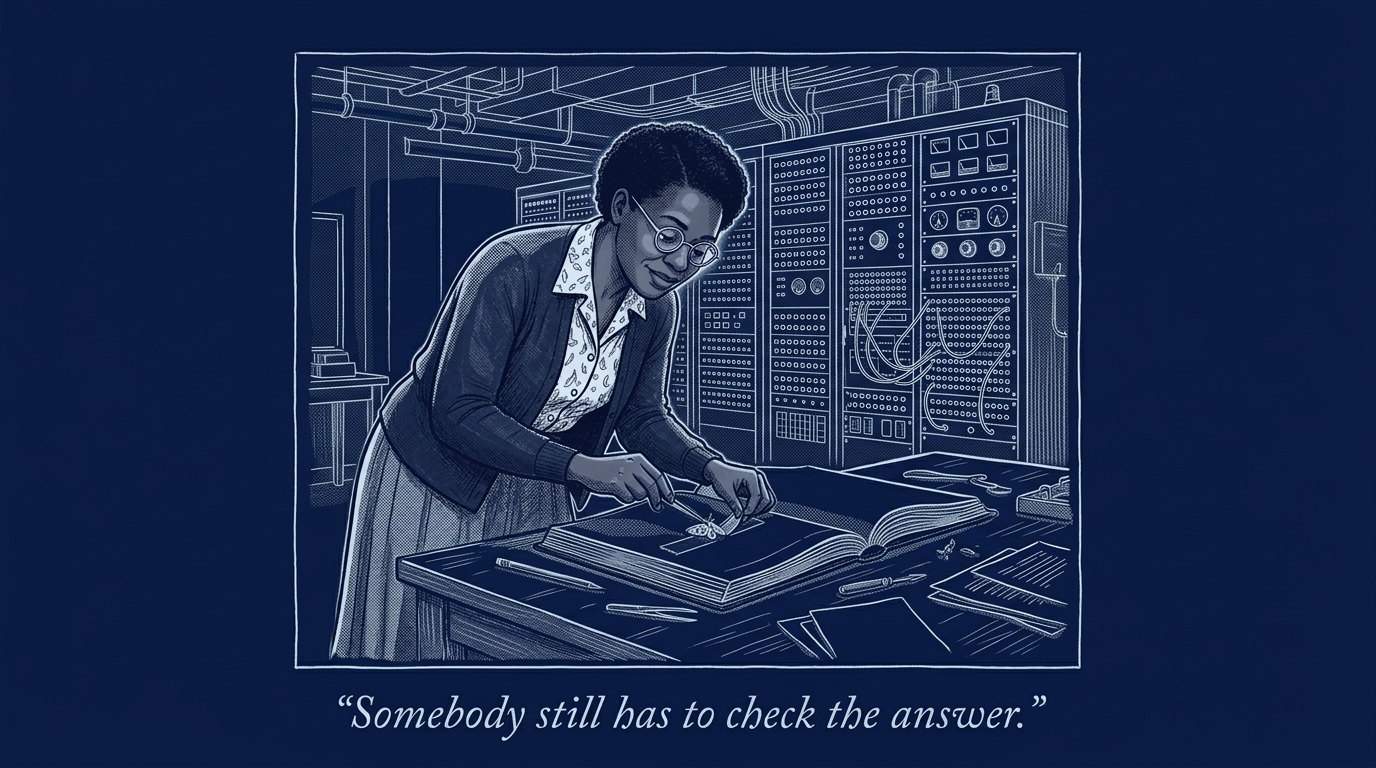
Who Checks the Answer
Machines have turned human language into numbers by three routes: hand-written rules, taxonomies, and learned statistics. Each moved where the structure lives, and the last returns the specification to plain English, so a person still has to check the answer.
Read →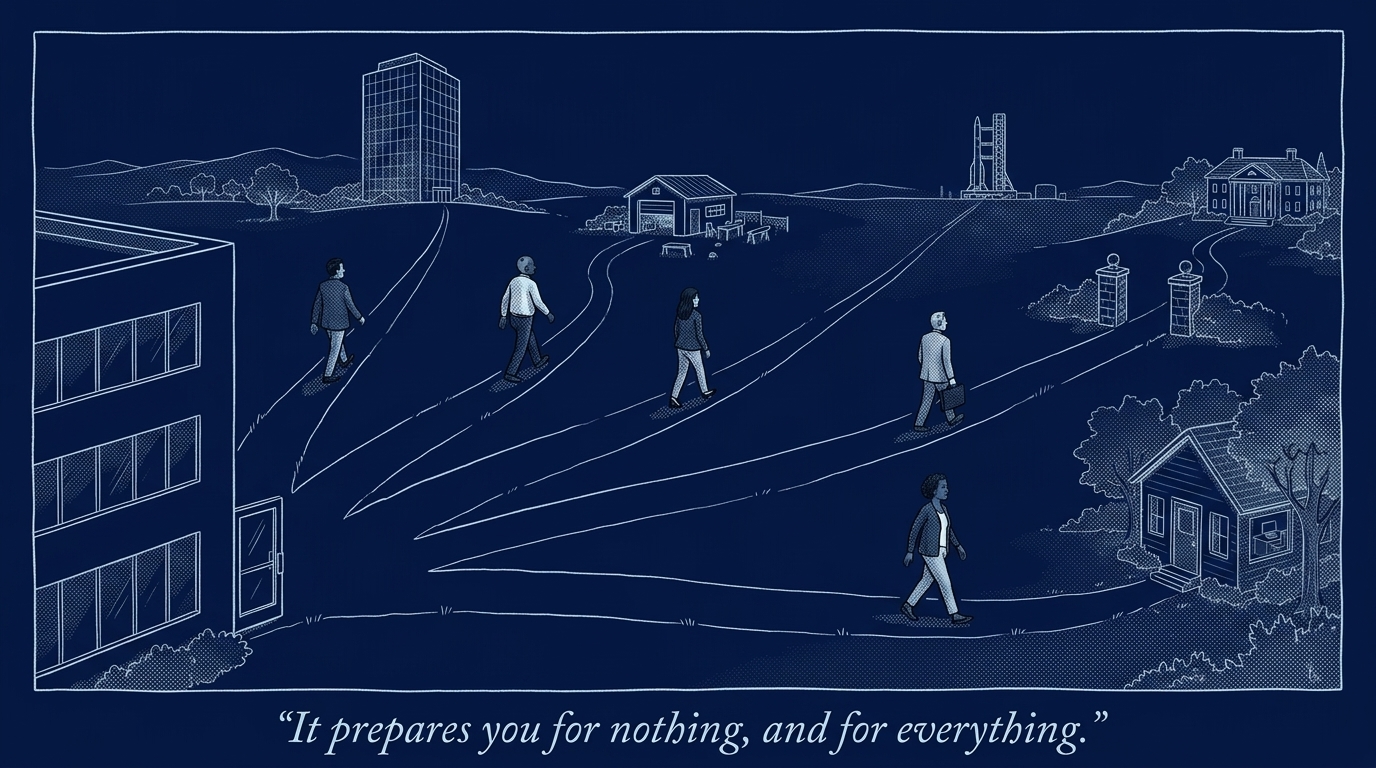 October 17, 2026
Judge an Institution by Where Its People Go Next
The best test of an institution may be what its people do after they leave. A former In-Q-Tel insider on where its alumni went, what the place taught, and how an investor can read a cohort.
Read →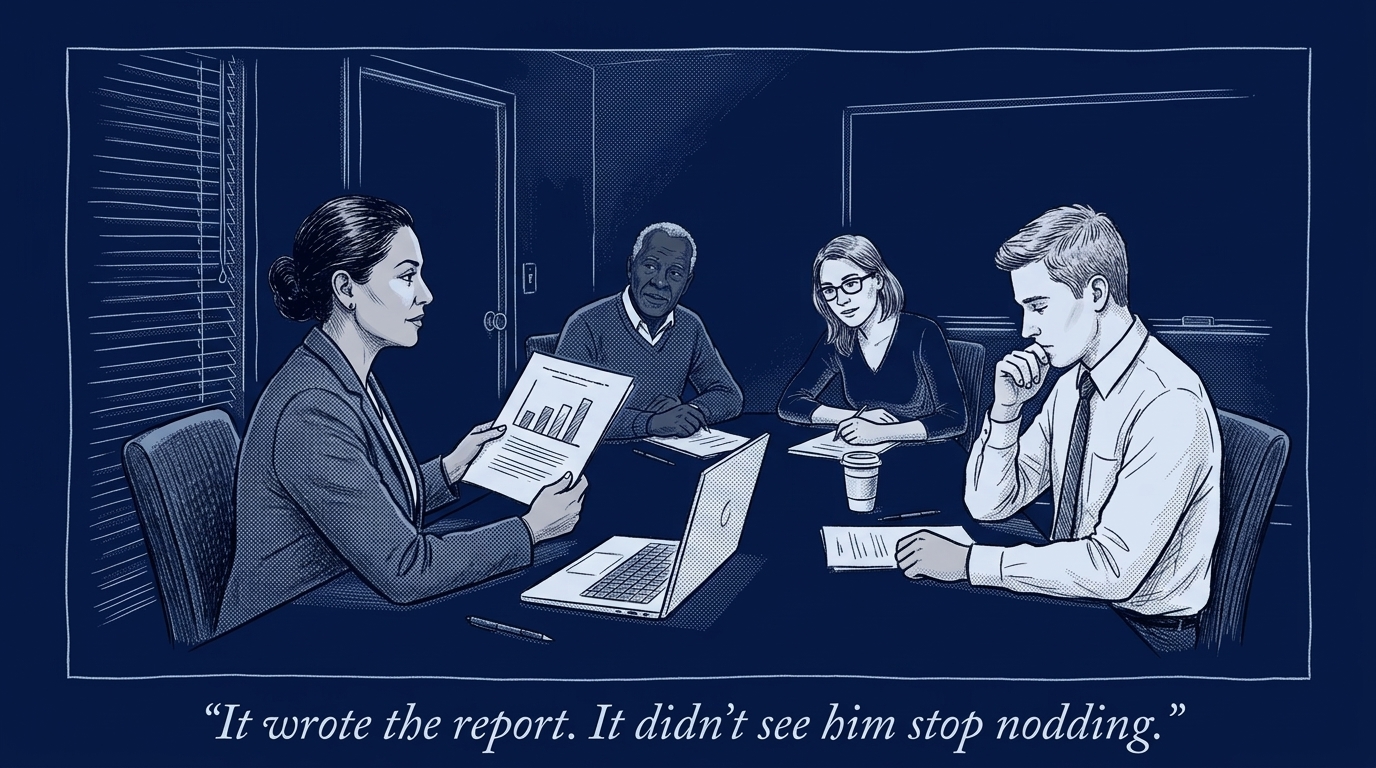 October 16, 2026
The Harness Is the Mechanism. The Read Is Still Ours.
The software around an AI model does much of the work, but the most valuable part is the read: judging a machine's output, a room or a person. That part stays with us.
Read →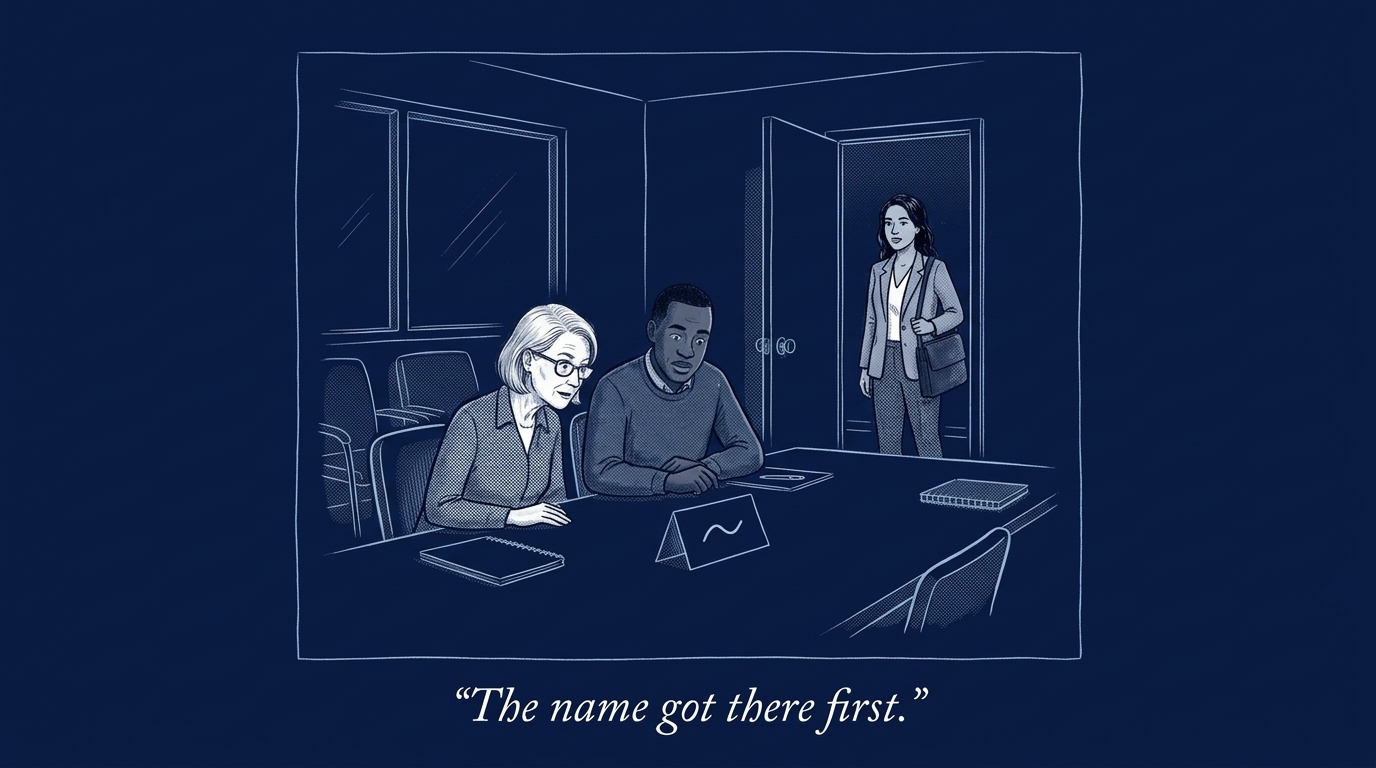 October 16, 2026
Ask the Founder Why the Company Has That Name
A company's name is the first claim it makes, before any pitch. How founders pick names, what a name tells the world about what they are building, and why the explanation is worth asking for.
Read → October 6, 2026
Where the Tracer Is Made
GE HealthCare is paying $945 million for SOFIE Biosciences, a network of 15 sites and 21 cyclotrons, because PET tracers decay in under two hours. When the product decays, location is the asset, and location is also who can reach a scan. For investors: ask what the moat is when the product decays.
Read → October 6, 2026
The Platform Didn't Change
The US funded Moderna's mRNA platform in a crisis, withdrew its mRNA vaccine funding in 2025, and the same platform just won a Phase 3 trial in melanoma. Support is a decision about a use, and it can be redirected. For investors: ask which use the evidence supports and who makes the next funding decision.
Read → October 6, 2026
What FDA Support Is
Valion Bio's entolimod holds FDA Fast Track and Orphan designations, but designations support the process, not the evidence, and the company's own filing shows $2.1 million in cash and going-concern doubt. For investors: a designation is a date and a cost, not a result.
Read → October 5, 2026
Twenty Times for a Garage Door
KKR reportedly agreed to pay about 20 times EBITDA for A1 Garage Door Service, while small garage door shops sell for 2 to 6 times. The multiple is the product. For investors: ask whether operations, price or the next buyer is paying for it.
Read →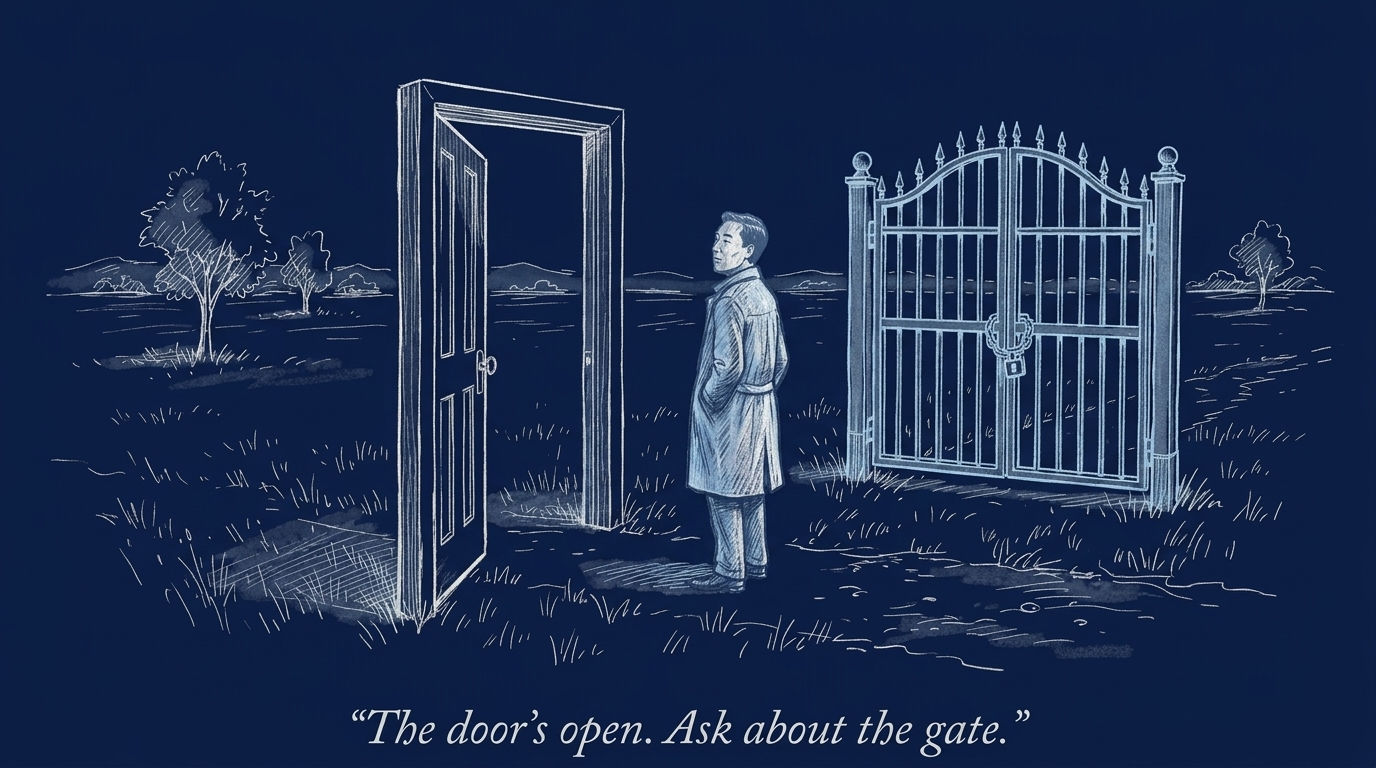 October 5, 2026
The Door and the Gate
Schwab bought Forge Global while the SEC proposed replacing the wealth test for accredited investors with an exam. Private-market access has a door and a gate, and neither says who gets the shares worth having. For investors: ask whether a product opens the door, the gate or the allocation.
Read →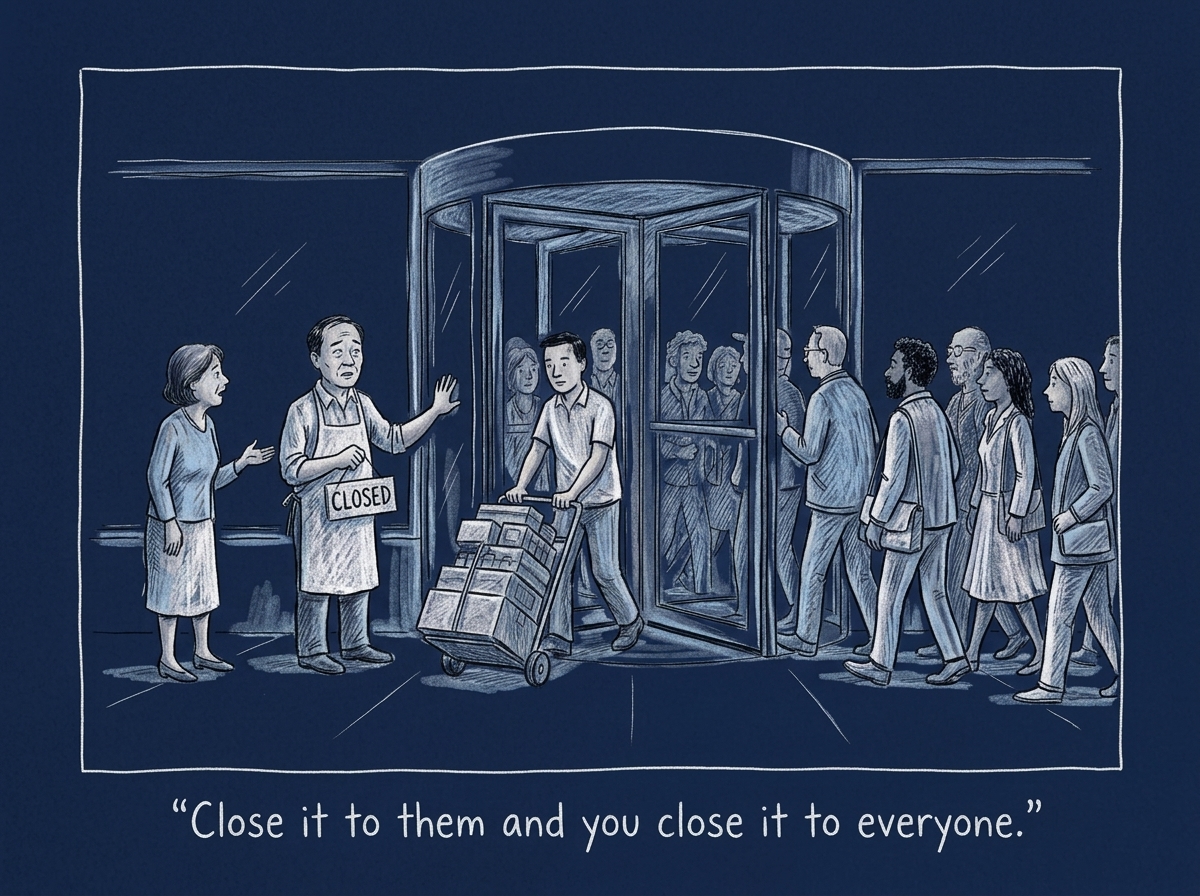 October 4, 2026
One Crawler, Two Jobs
Publishers weighing a block on Google find one crawler does both jobs: feeding AI summaries and feeding search. Bundling turns a negotiation into an exit. For investors: ask how much of a company's traffic rides on one index and what it could do if the terms changed.
Read →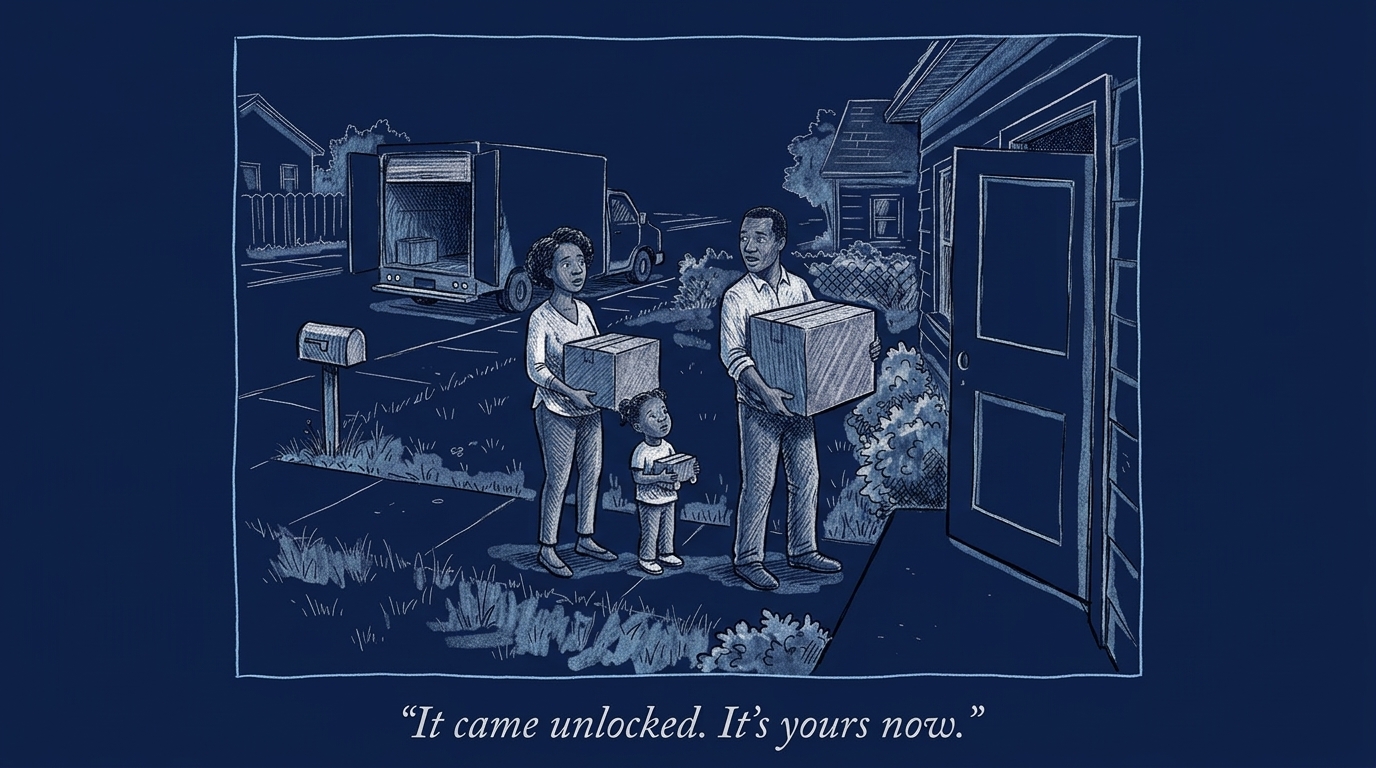 October 4, 2026
Who Owns the Default
UpGuard found 16,326 Supabase databases readable by anyone, most with missing row-level security. A default belongs to whoever sets it and costs whoever inherits it. For investors: ask who set the defaults a product inherits, and who checked them.
Read →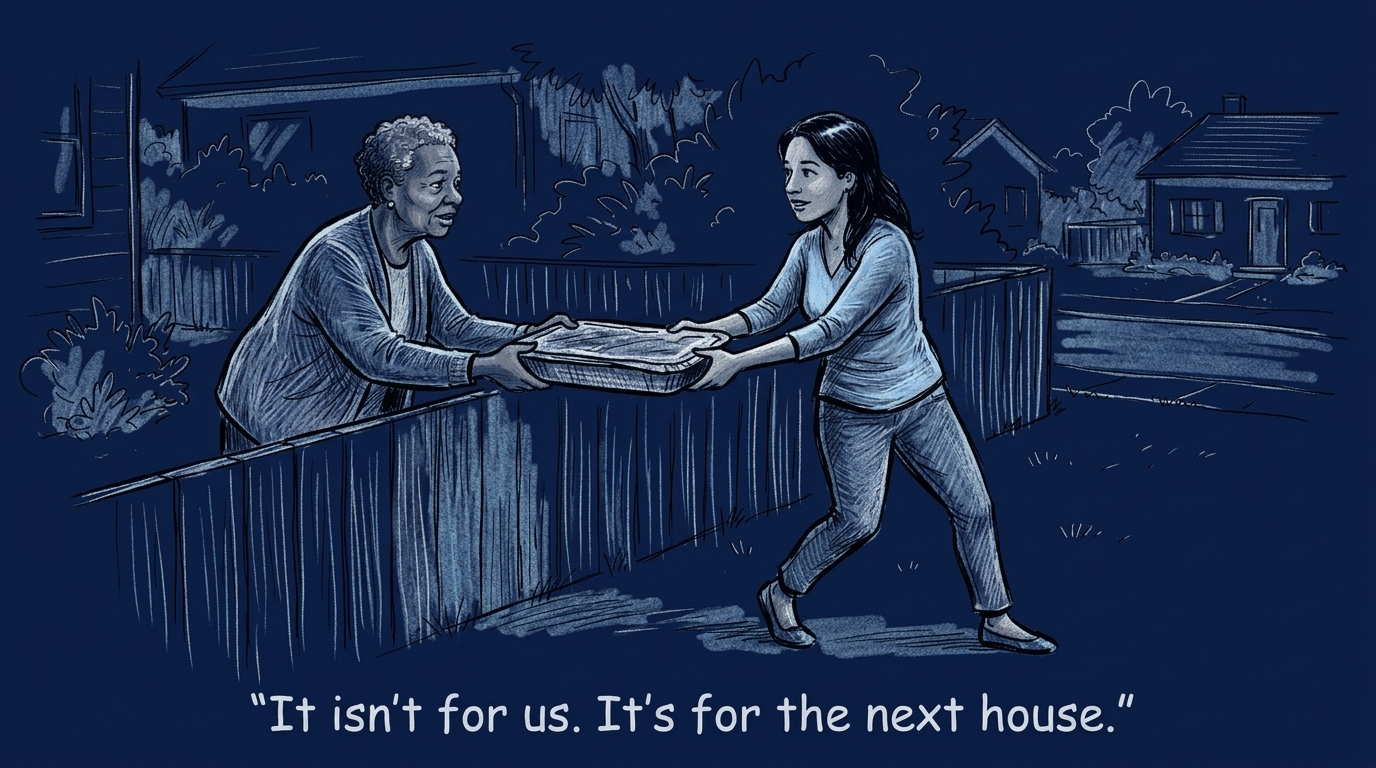 October 4, 2026
What You Add
A network of trust can be mined or fed. A look at what it means to add to one instead of extracting from it, the Green Book as a case where adding was the mechanism, and the question it raises about any well-connected founder.
Read →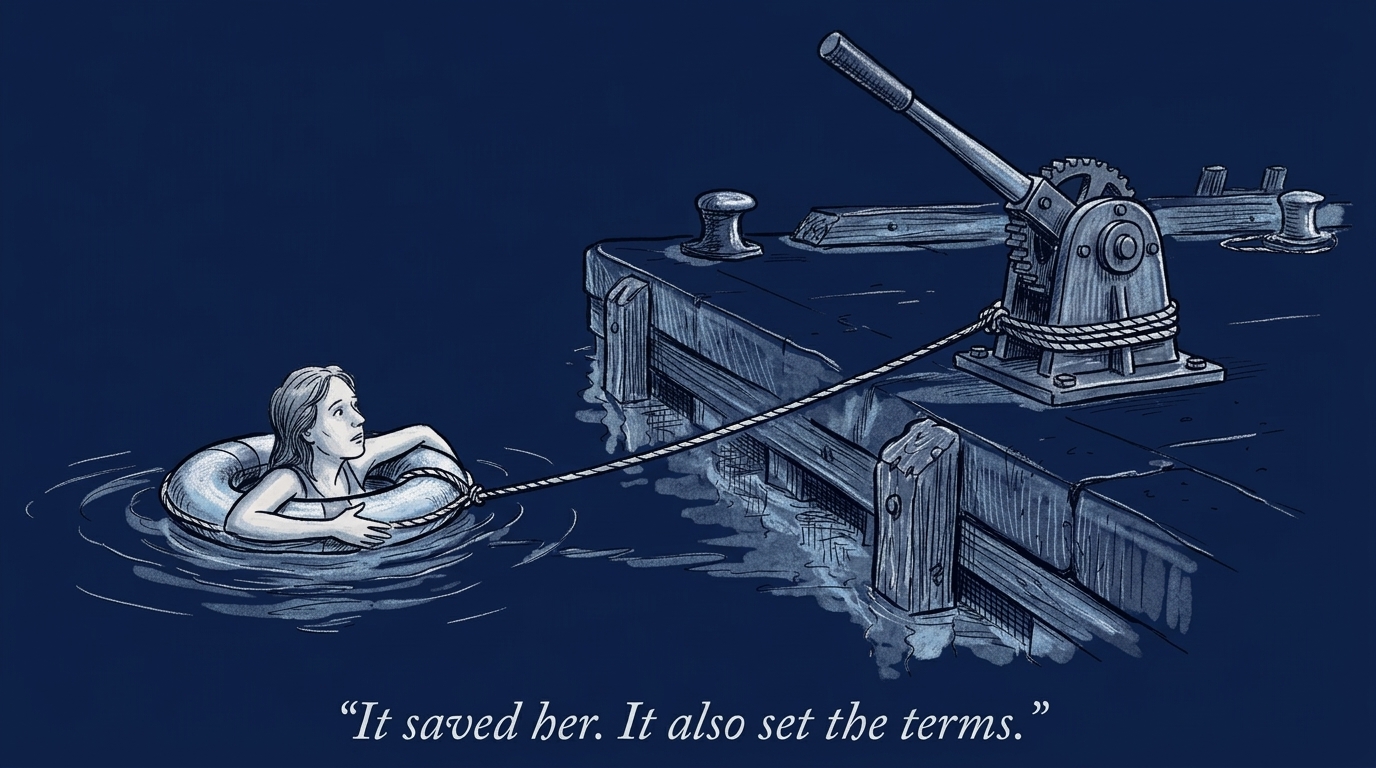 October 3, 2026
Lifeline and Lever
In 1997 Microsoft put $150 million into Apple and promised five years of Office for the Mac. The record shows the same promise kept Apple alive and let Microsoft set terms, and a federal appeals court later held part of the deal anticompetitive.
Read →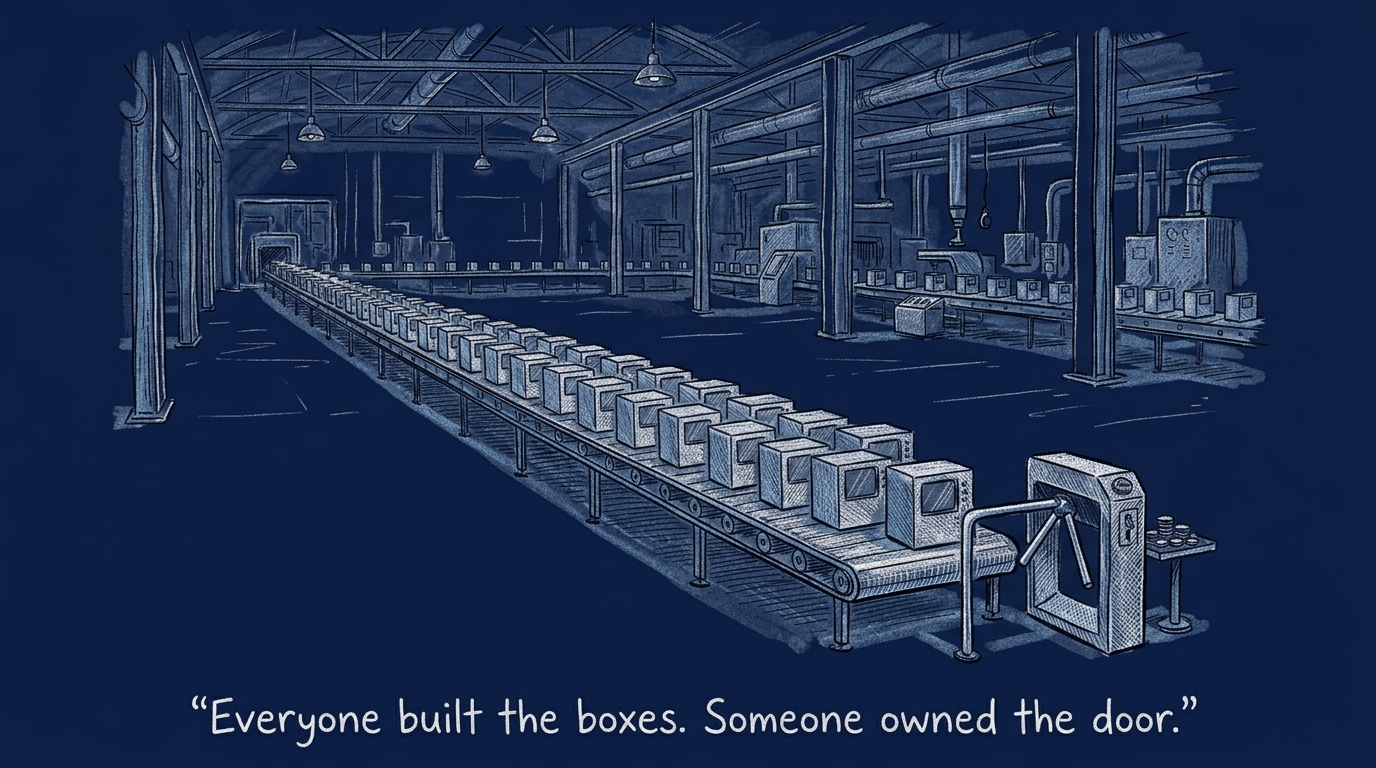 October 3, 2026
Who Keeps the Value of a Standard
IBM opened the PC, and the value went to Microsoft and Intel, the layers customers could not leave. A look at the public record on who was paid, and why the useful question is which layer a company controls.
Read →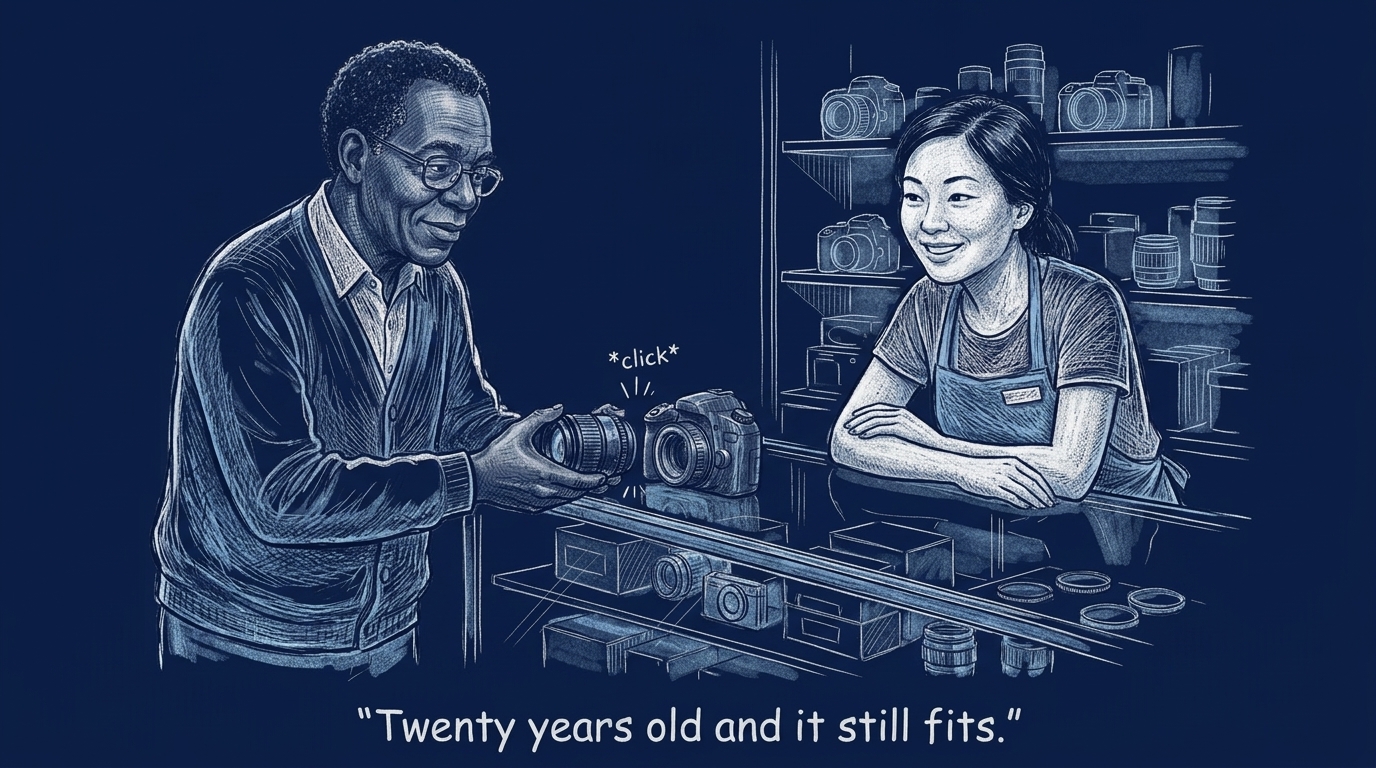 October 2, 2026
The Standard That Kept Faith
Nikon kept its lens mount for decades and bridged it when it moved to mirrorless; Apple bridged two processor changes. Neither treated keeping faith with the people already on its platform as optional, and the test of a company's faith is whether what you bought still fits.
Read →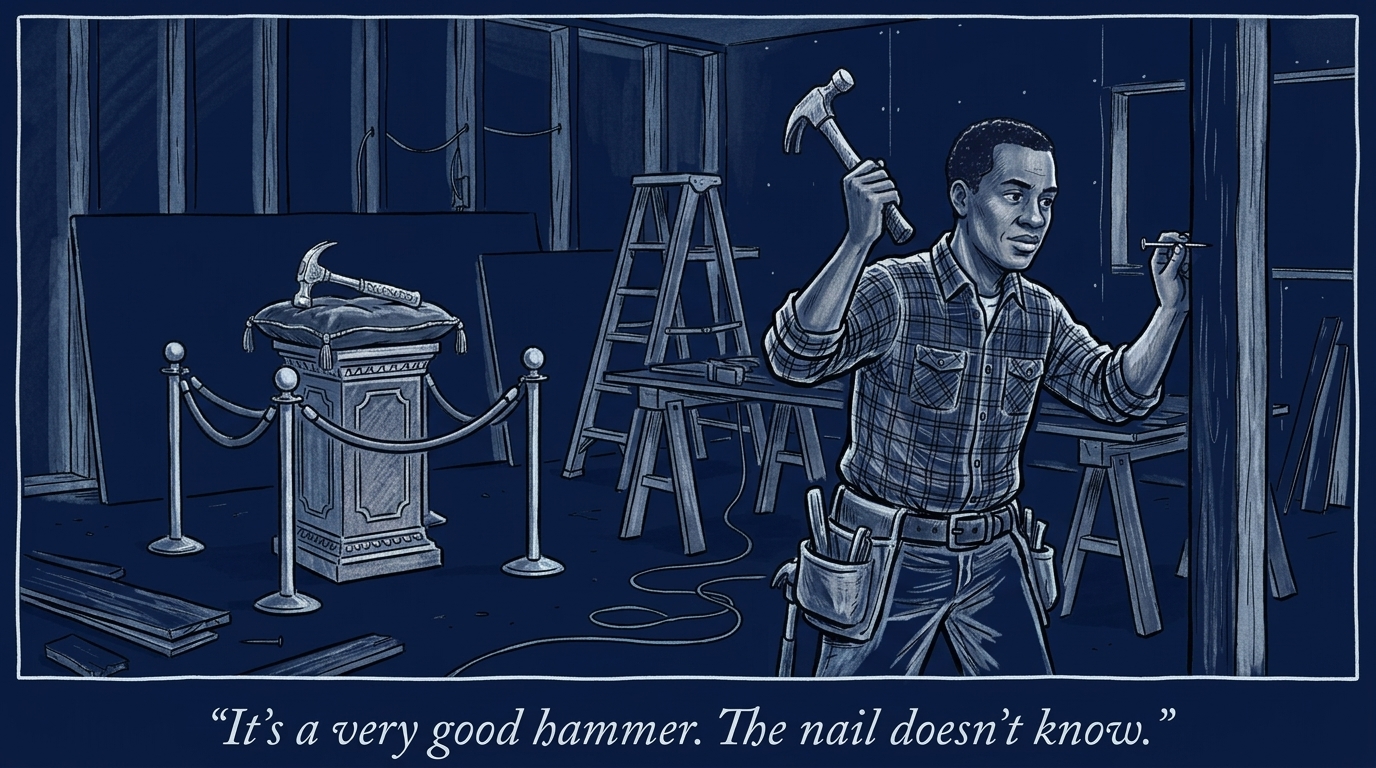 October 2, 2026
Real Work Does Not Need the Best Model
Most real work runs on sufficiency, not the optimum: open-weight models carry most of the volume at a fraction of the spend, and the frontier keeps its premium only where quality is the one thing that cannot give.
Read →
October 2, 2026
Real Work Does Not Need the Best Model
Most real work runs on sufficiency, not the optimum: open-weight models carry most of the volume at a fraction of the spend, and the frontier keeps its premium only where quality is the one thing that cannot give.
Read →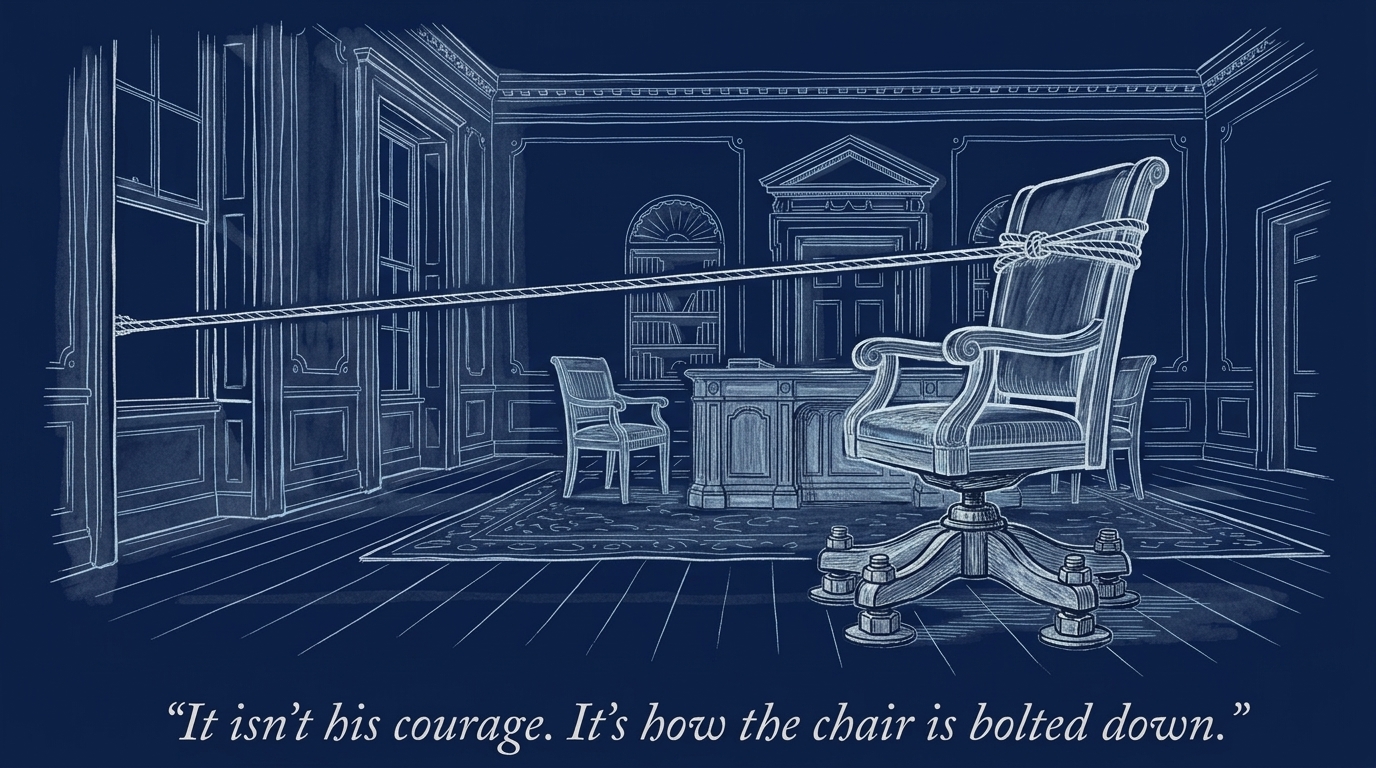 October 2, 2026
Where the Power Was Built
Ask where a person's power was built before you ask what they promised: in a structure that holds without them, in a custom that lasts only while they pay for it, or in the trust of the people they serve.
Read →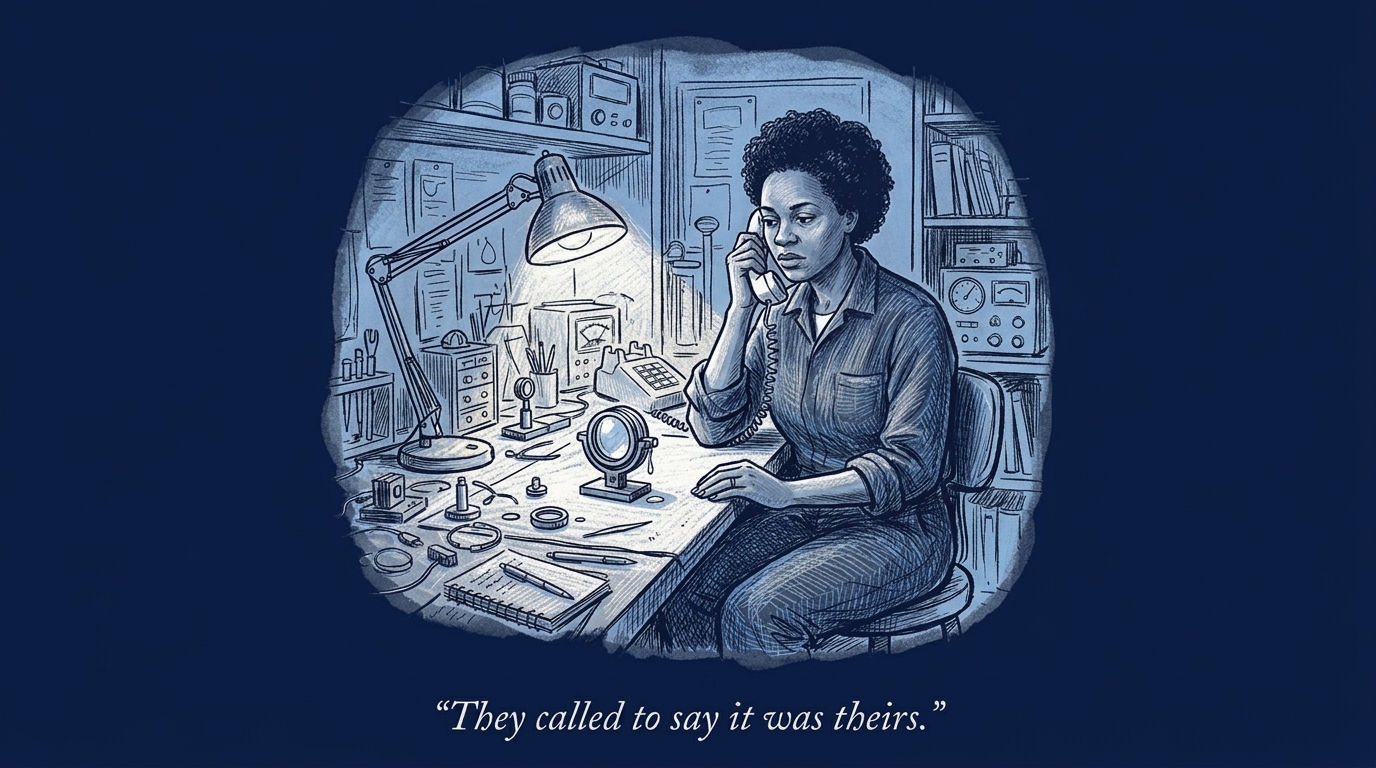 October 1, 2026
The Dealing Is the Tell
A named risk is still a risk. When it arrives, the tell is where the blame goes. For an investor: ask about the worst failure and listen for who owns it.
Read →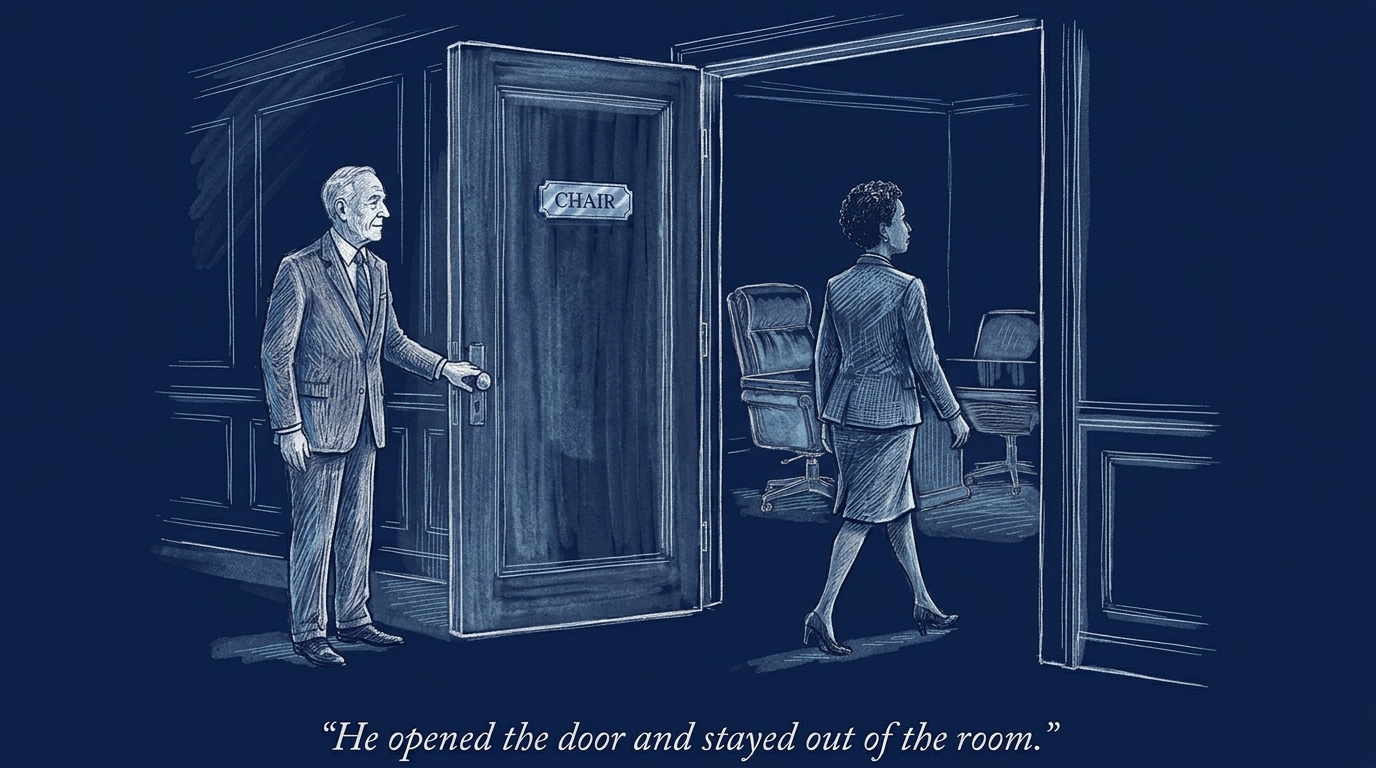 October 1, 2026
What We Hand Down
A family hands down a structure, not a skill: open the door, take your hand off, judge what the learner makes. For an investor: back the learner.
Read →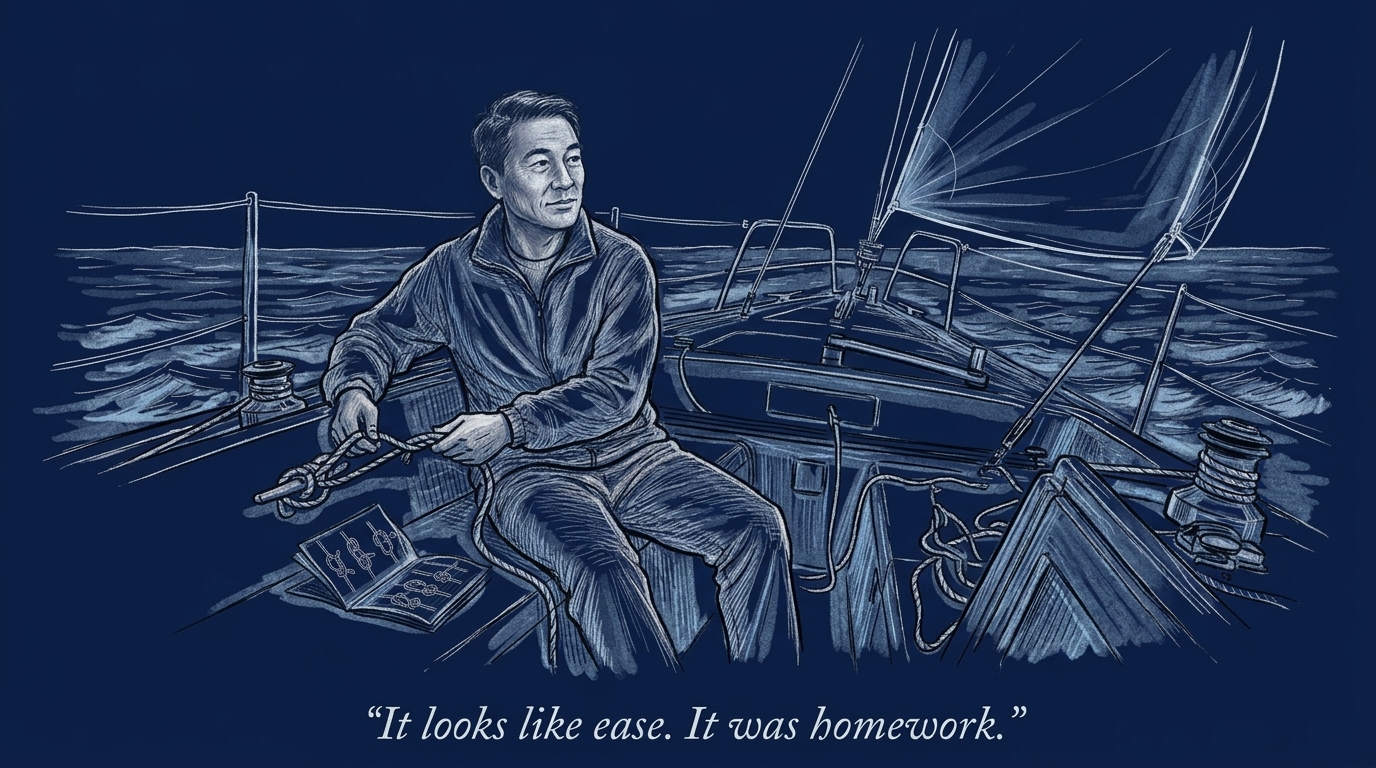 October 1, 2026
The Second Curriculum
Capacity gets you into the room; a code nobody tells you exists keeps you there, and it can be taught. For an investor: test how fast a founder learns the code, not only the capacity.
Read →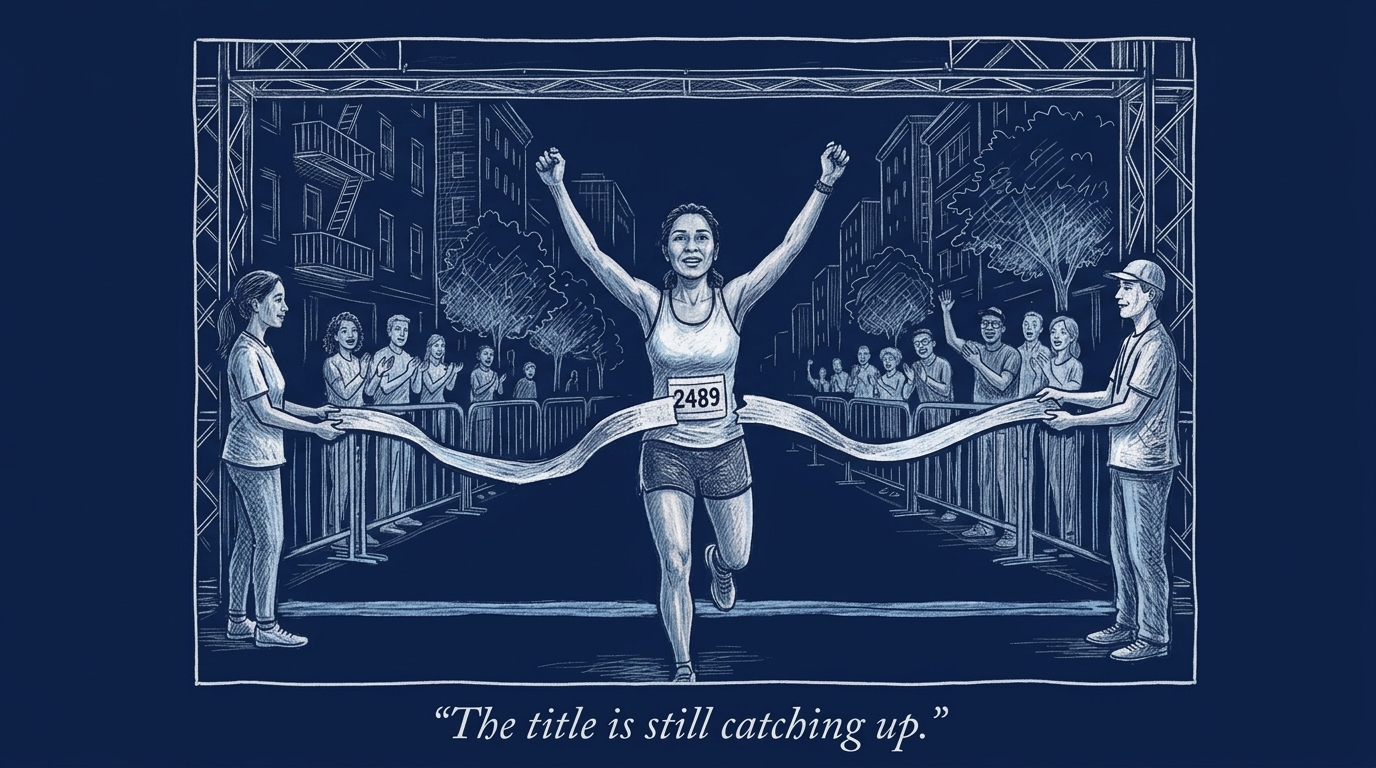 October 1, 2026
The Work Runs Ahead of the Title
Titles trail the work. Read the scope a person ran, who checked it and who promoted them. For an investor: recognition from people with nothing to gain is the best evidence.
Read →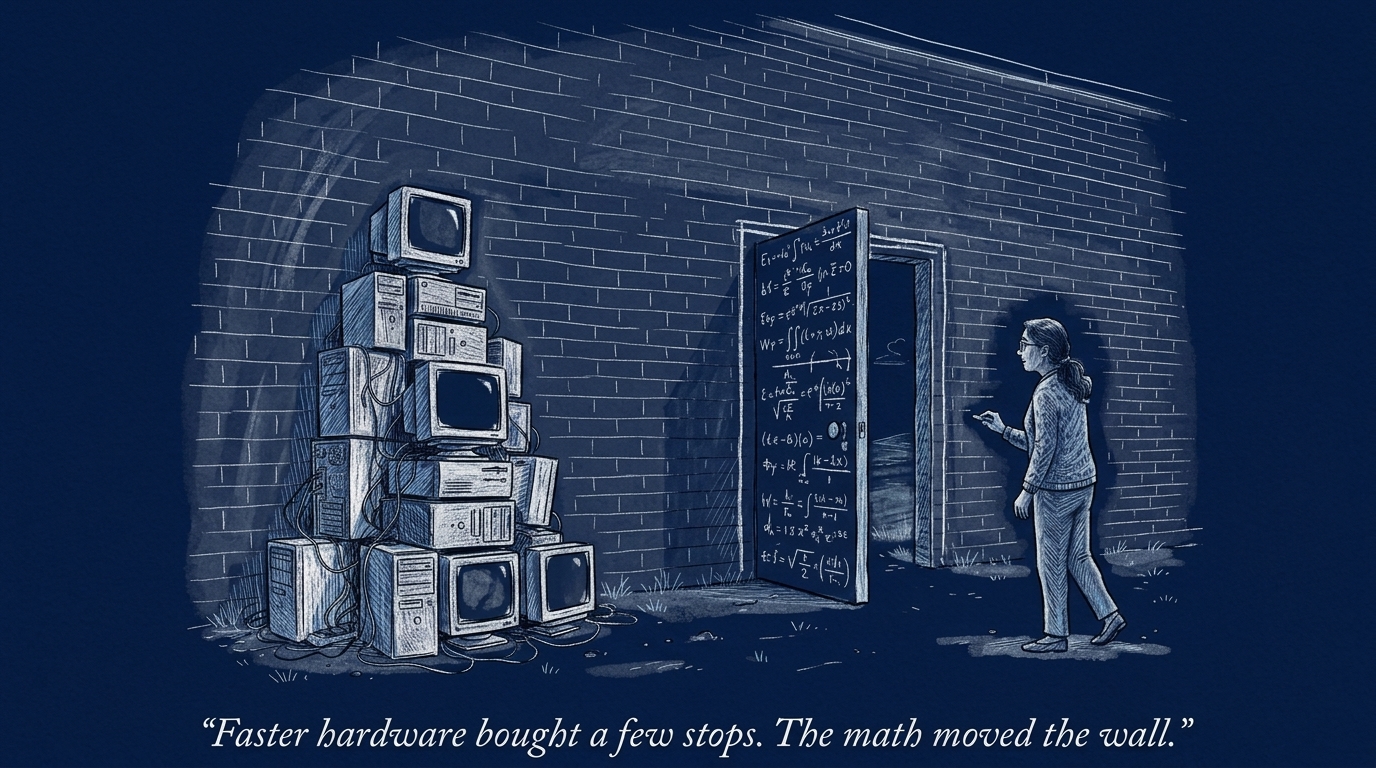 October 1, 2026
Where the Wall Is
Faster hardware moved the wall of what computers can solve by a handful of steps. Mathematical shortcuts moved it far more, and they hold until physics shows up. For an investor: ask what the shortcut assumes.
Read →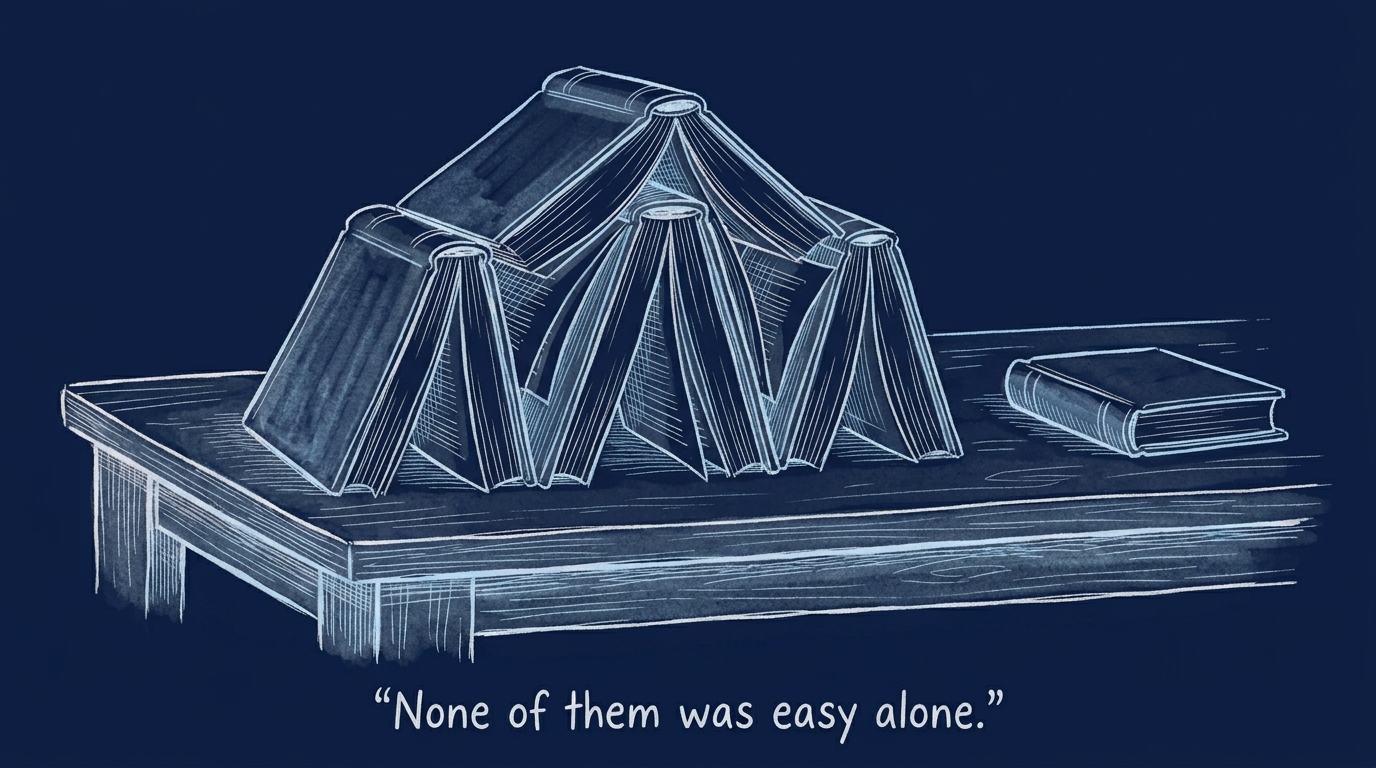 October 1, 2026
Nothing Is Alone
The point of a good education is not the fields. It is the connections between them. A hard-science degree makes the liberal arts argument, and an investor can use it.
Read →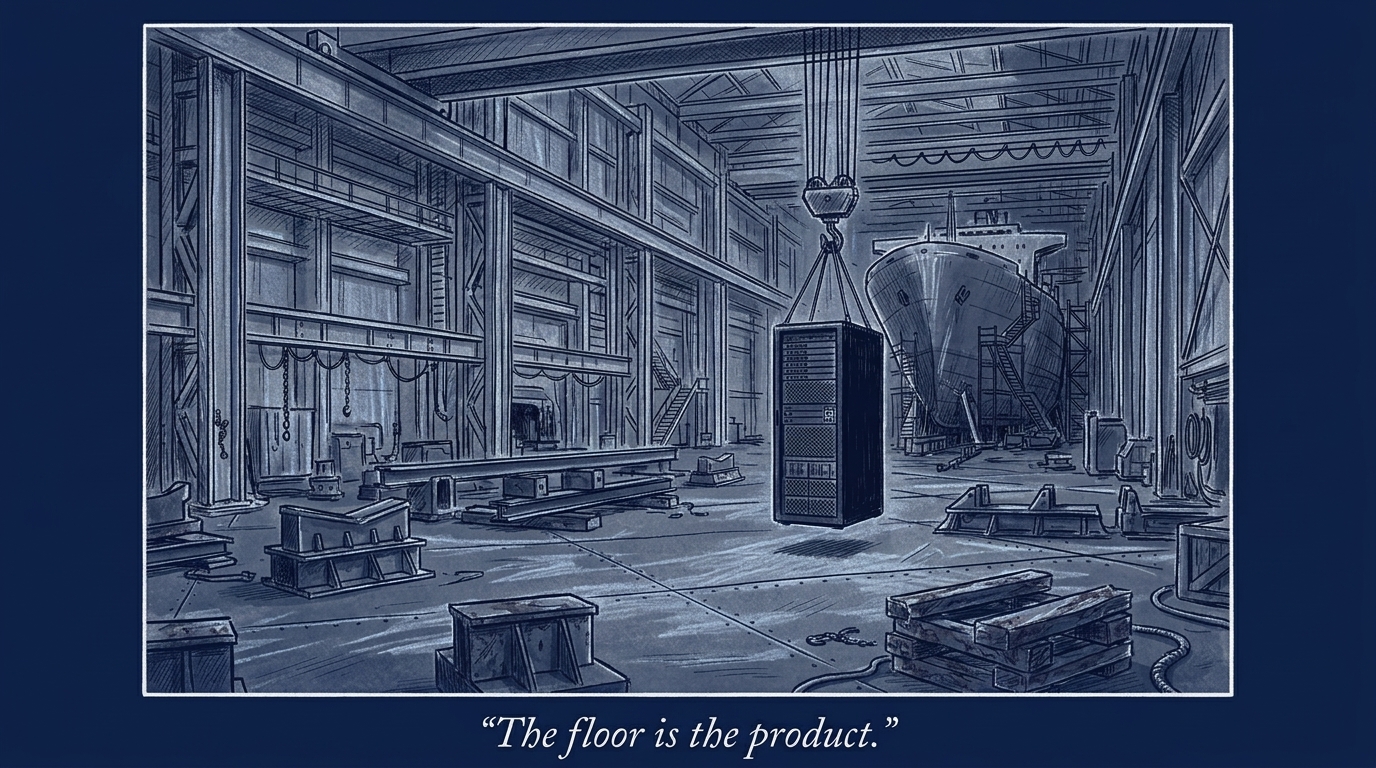 October 1, 2026
Cold and Heavy: Why a Shipyard Town Could Hold an AI Data Center
An AI rack weighs about 3,000 pounds and draws about 120 kilowatts. Most data centers can't hold one. A cold place with heavy floors and power can, and a shipyard town may be one.
Read → October 1, 2026
Who Buys the Company
Most startups do not end at an IPO; about 94 percent of exits are acquisitions. For investors: who can afford to buy, why the largest private companies have no buyer, and why control decides who can say no.
Read → September 30, 2026
She Made the Wager
Seeing character in someone before there is any proof of it is not calculation — it is a bet. It was made on me first, and I have spent my life making it on others.
Read → September 27, 2026
Nothing Is Universal, All Is Imprinted
Nothing you know about people is universal — it was imprinted, and your own frame can read a stranger exactly backwards while feeling like the truth. An Indian head-tilt that means yes, an old recipe you can read but can't cook: the only honest fix is to go where they actually stand. Meet people where they are.
Read → September 27, 2026
Meet People Where They Are
Same stock, different kids — no one is legible from their markers. The only honest way to know anyone is to go where they stand and read the shape of them and the why underneath. Meet people where they are.
Read →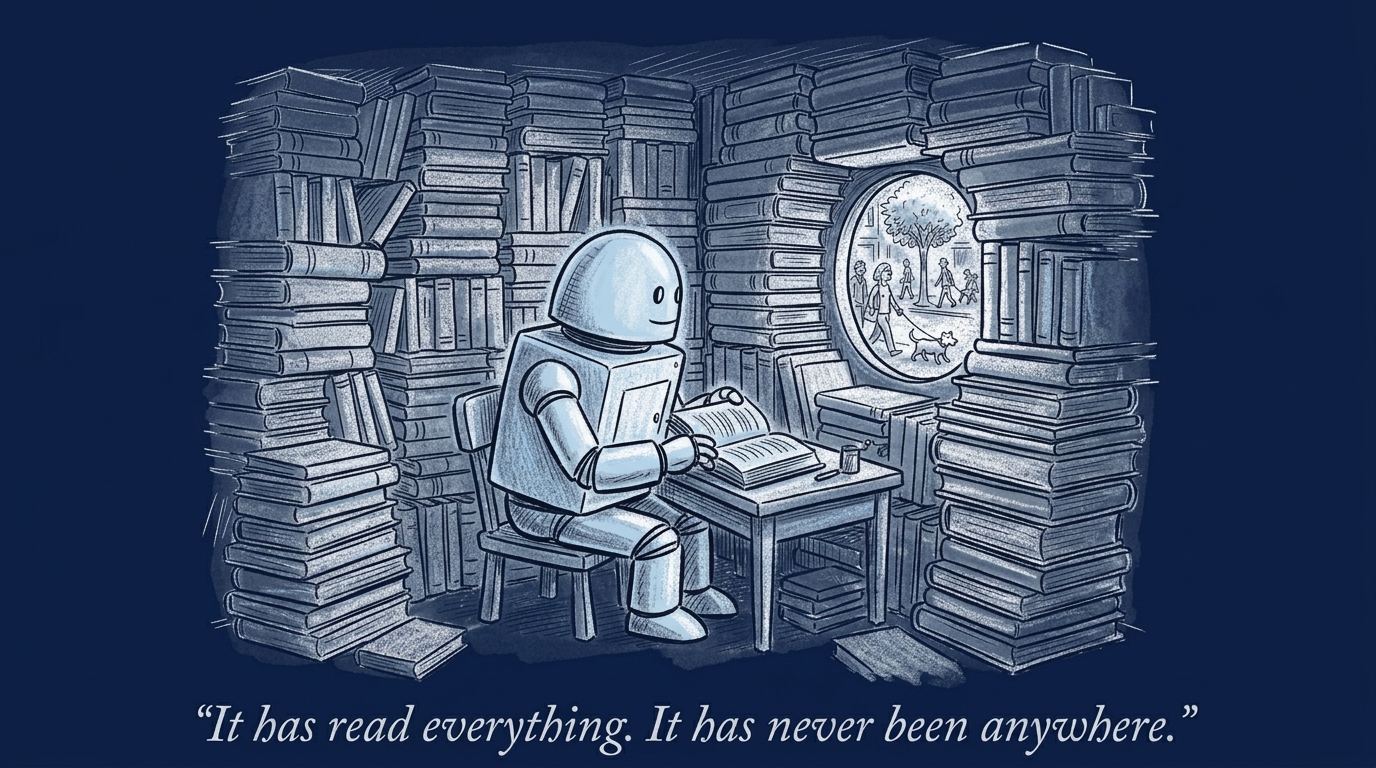 September 26, 2026
Stranger in a Strange Land
My mother and I talked about AI, and this is what I told her — the difference between a machine that has read everything and a person who has been somewhere. Breadth is a free utility now; what survives is the knowing that was lived: the walked path, the constructed library, the darkroom, the veil. The machine has the map. I have the walking.
Read →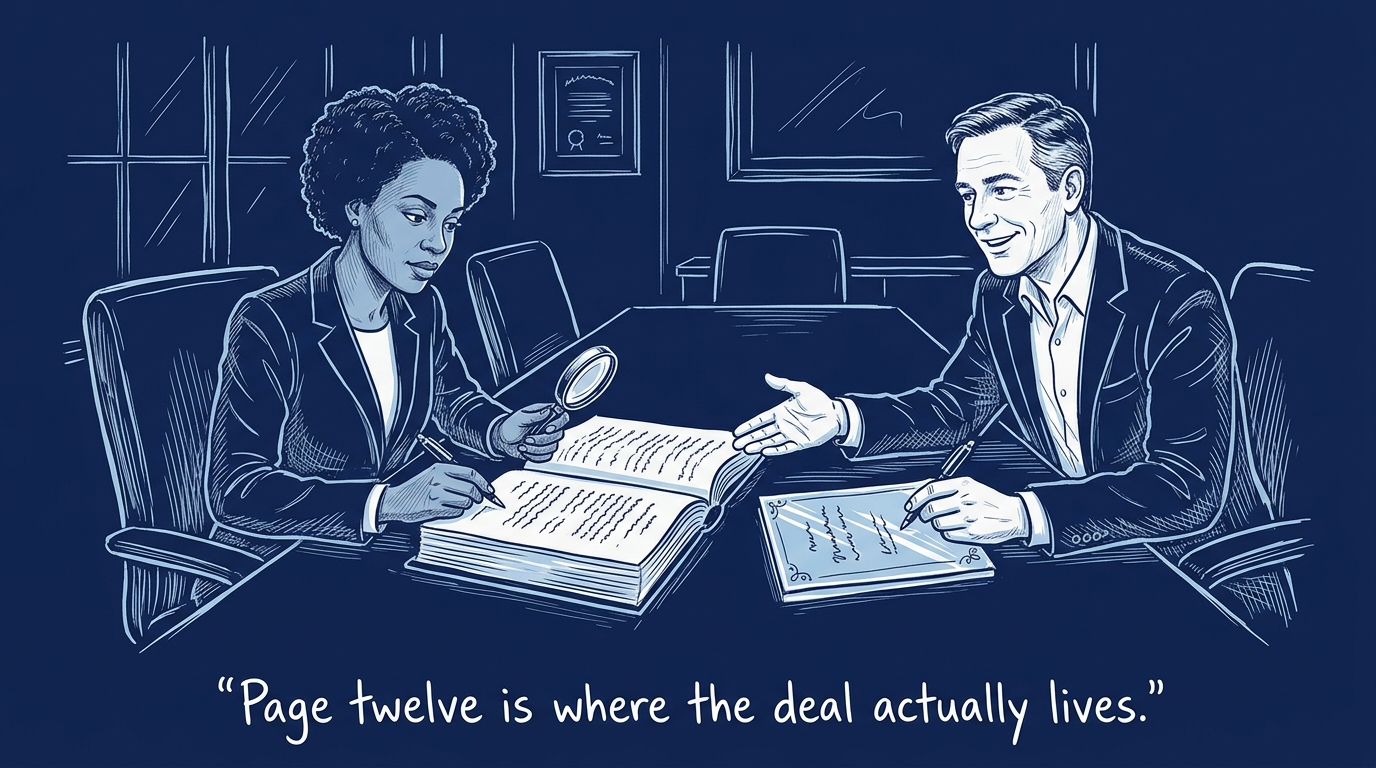 August 22, 2026
What a Contract Is Actually For
Contracts don't exist to describe the deal working. They exist to allocate what happens when it doesn't -- why our diligence reads termination, indemnification, and liability clauses first, not last.
Read →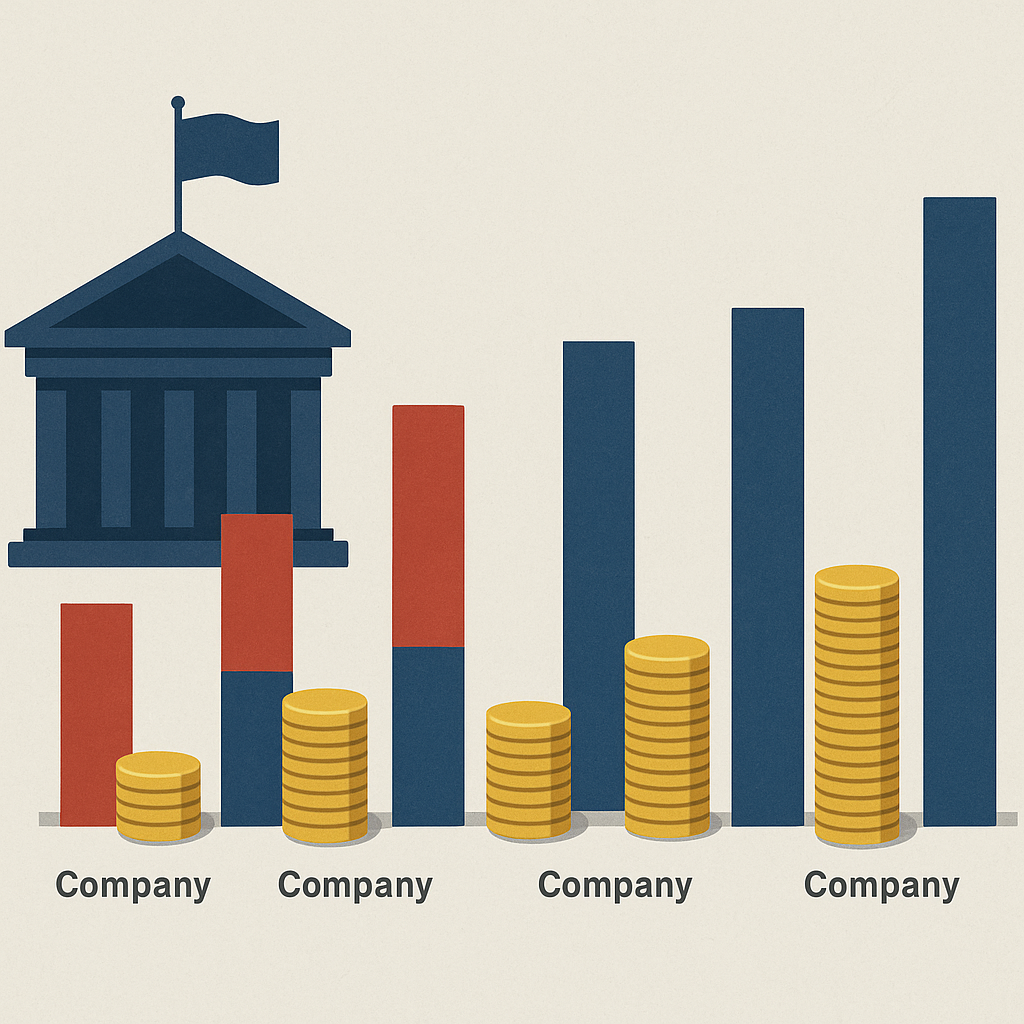 August 9, 2026
The government took equity in four companies this year. Private capital did not wait for permission.
Four companies, one new industrial-policy tool -- and private capital did not move in a consistent order relative to the government stakes.
Read →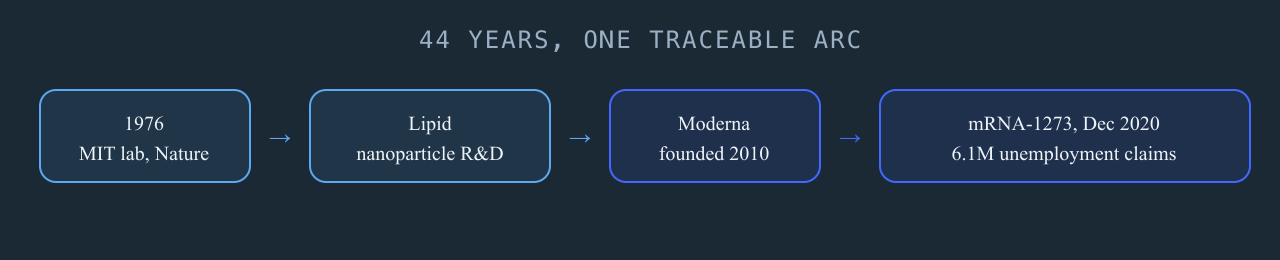 August 9, 2026
The rejected 1976 paper sitting inside the steepest line on the Fed's own chart
A Nobel laureate said it couldn't be done. Forty-four years later it's a real, traceable input into how fast the 2020 labor market recovered.
Read →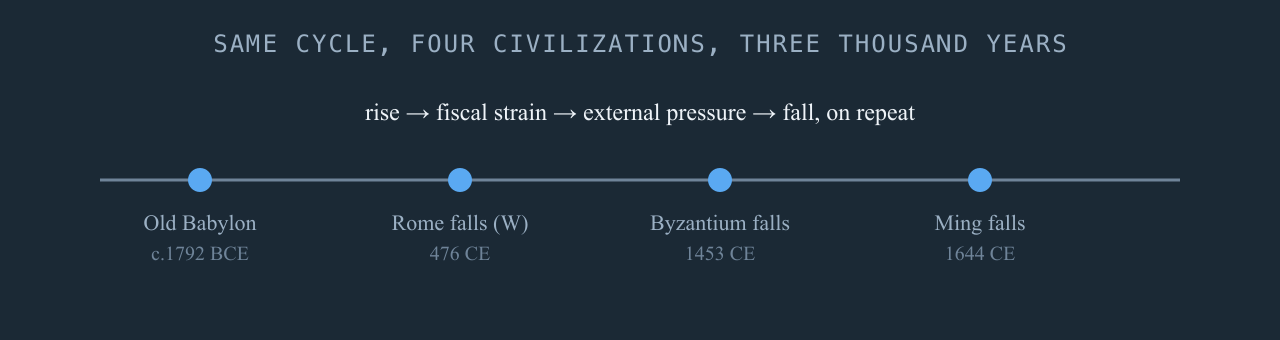 August 9, 2026
Ray Dalio's cycle is real -- but it never explains why the collapse happened on a specific Tuesday
Four empires, one measurable cycle, three thousand years -- and every hinge was still one person's decision. Both halves matter for timing.
Read →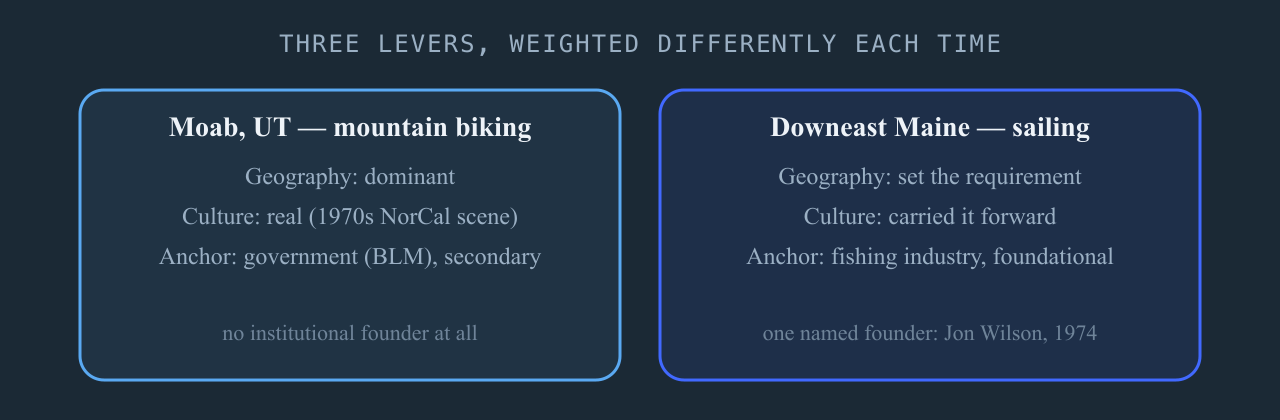 August 9, 2026
Why a sector clusters where it does -- and which lever actually explains your target region
Geography, government, and culture compete to explain why an industry clusters in one place. Two real cases show the weighting is never the same twice.
Read →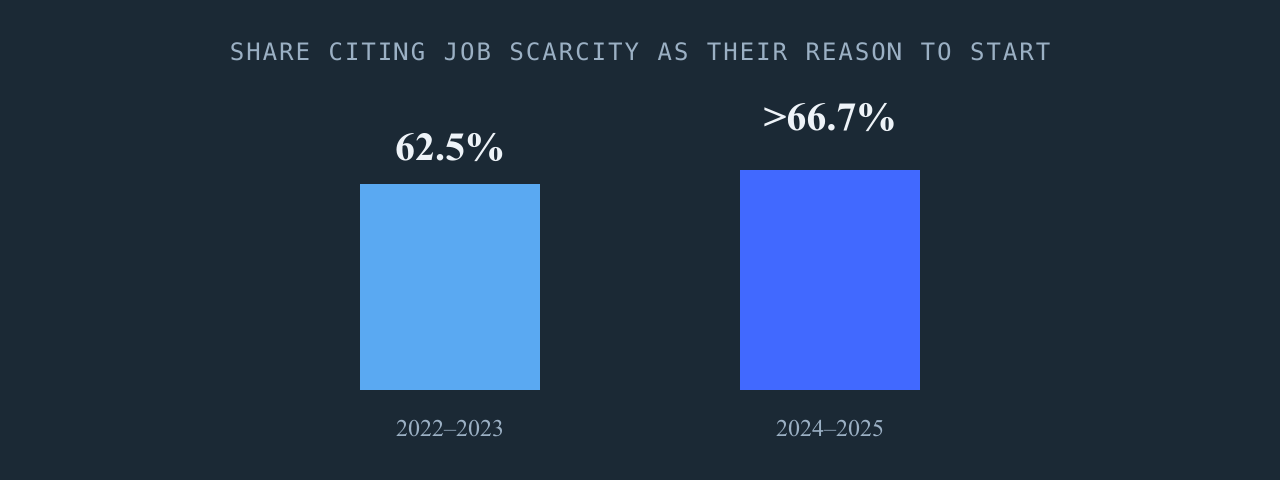 August 9, 2026
Two-thirds of the founders you're meeting didn't choose this -- they were pushed into it
Job scarcity, not opportunity, is now the majority reason Americans start a business -- and the share is still rising, not holding steady.
Read →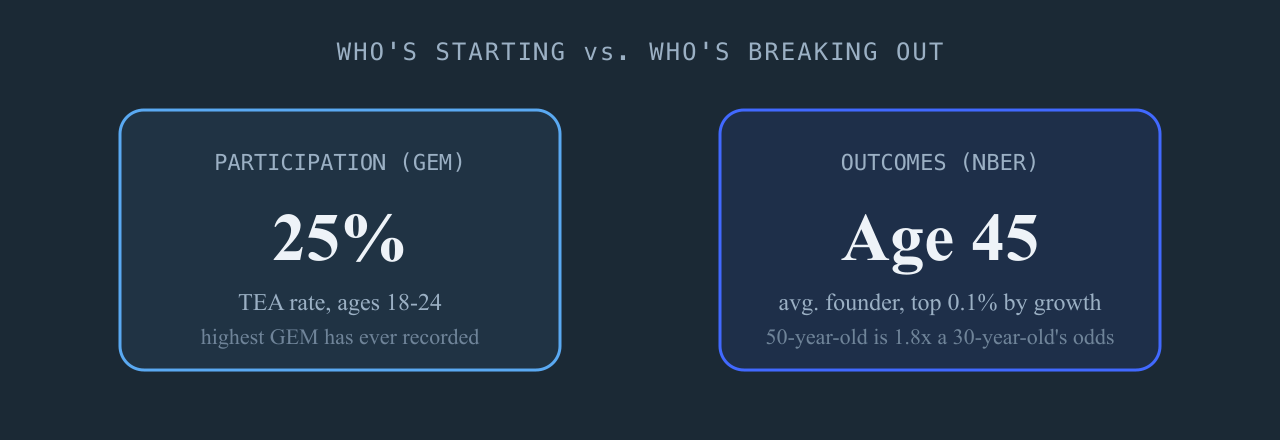 August 9, 2026
The founder you're meeting at 28 and the founder who actually breaks out at 45
Two real datasets on founder age point in opposite directions -- and knowing which one you're looking at changes how you should read a pitch.
Read →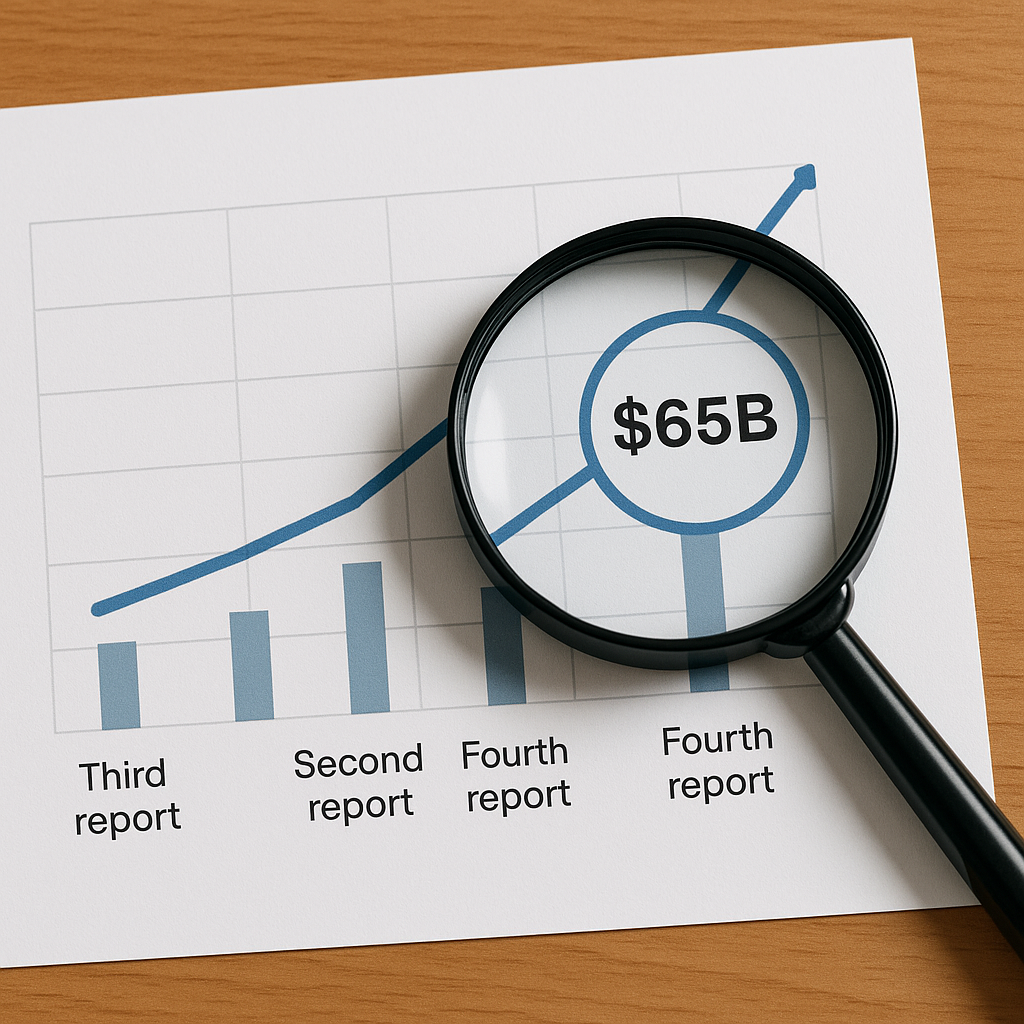 August 9, 2026
A funding round doesn't get more real the fourth time someone reports it
We found a single $65 billion round logged four times in our own data. Why that's not just a bug -- and what it says about signal vs. noise in venture capital.
Read → August 9, 2026
Fifty years of venture capital's own boom-bust cycle -- and the lesson our industry keeps re-learning
Venture capital wasn't always an industry. Two 1978 policy decisions created it -- the boom-bust pattern from then still shapes where capital moves today.
Read →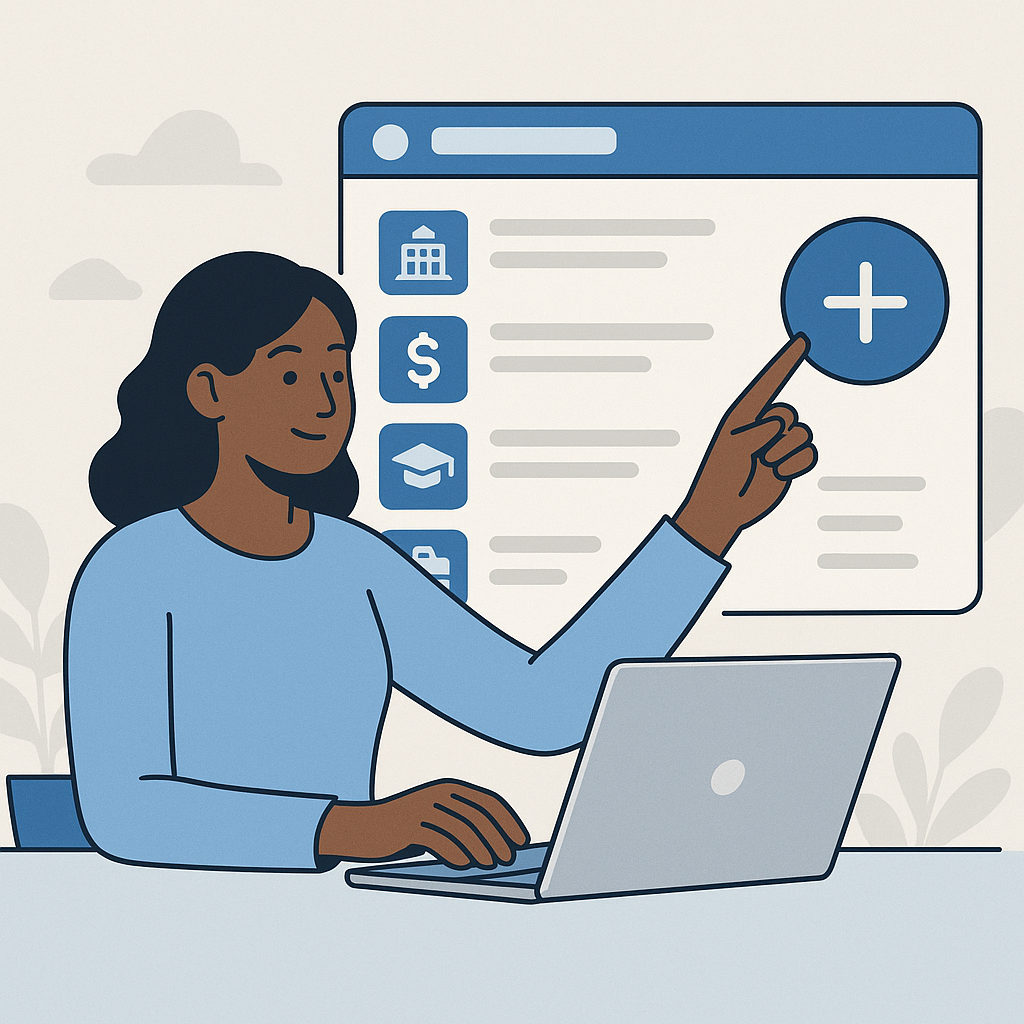 July 27, 2026
Oluwadi is open now — no account, and anyone can add to it
Oluwadi no longer requires an account, and anyone can propose a company, investor, university, or organization for inclusion.
Read →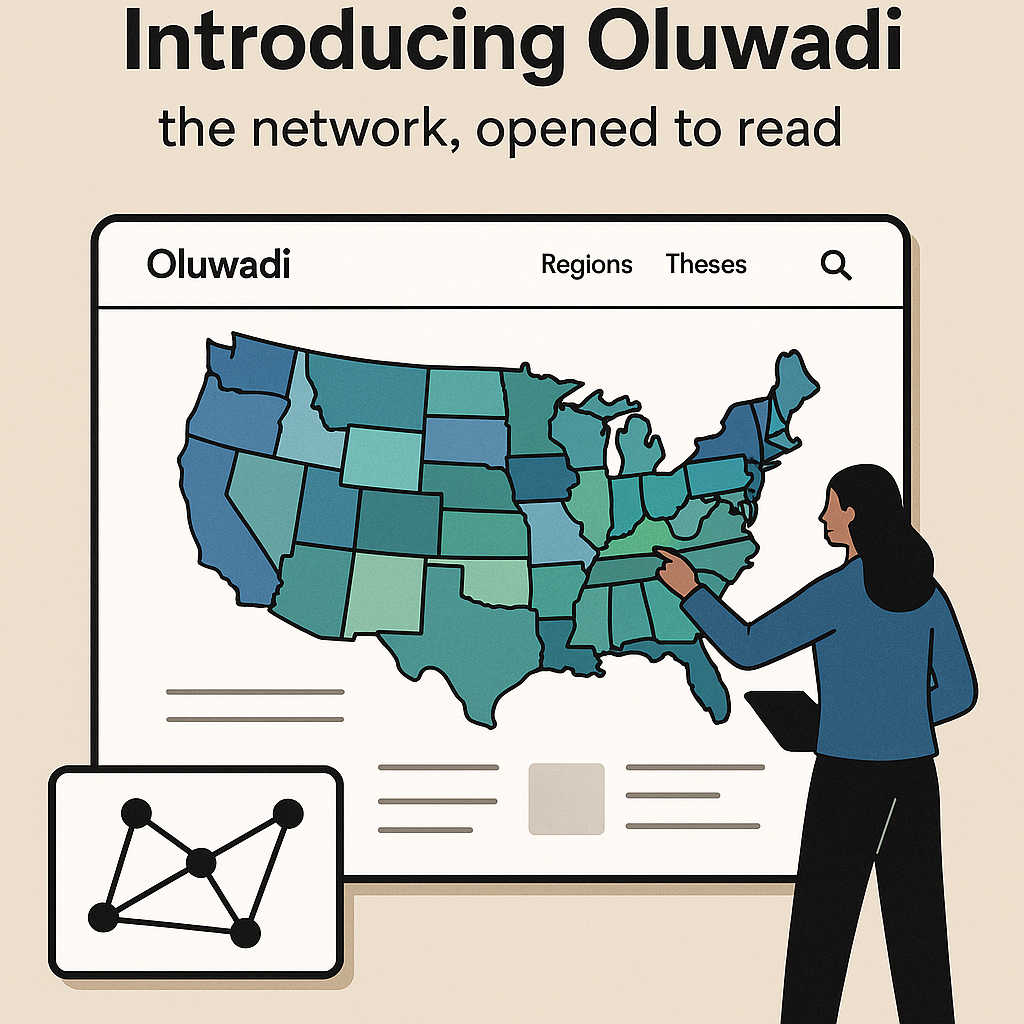 June 27, 2026
Introducing Oluwadi — the network, opened to read
Oluwadi is live: a public, continuously updated way to read the U.S. venture network region by region and thesis by thesis. Why a region's single label hides more than it tells -- and what it means to read a place for what it actually builds.
Read →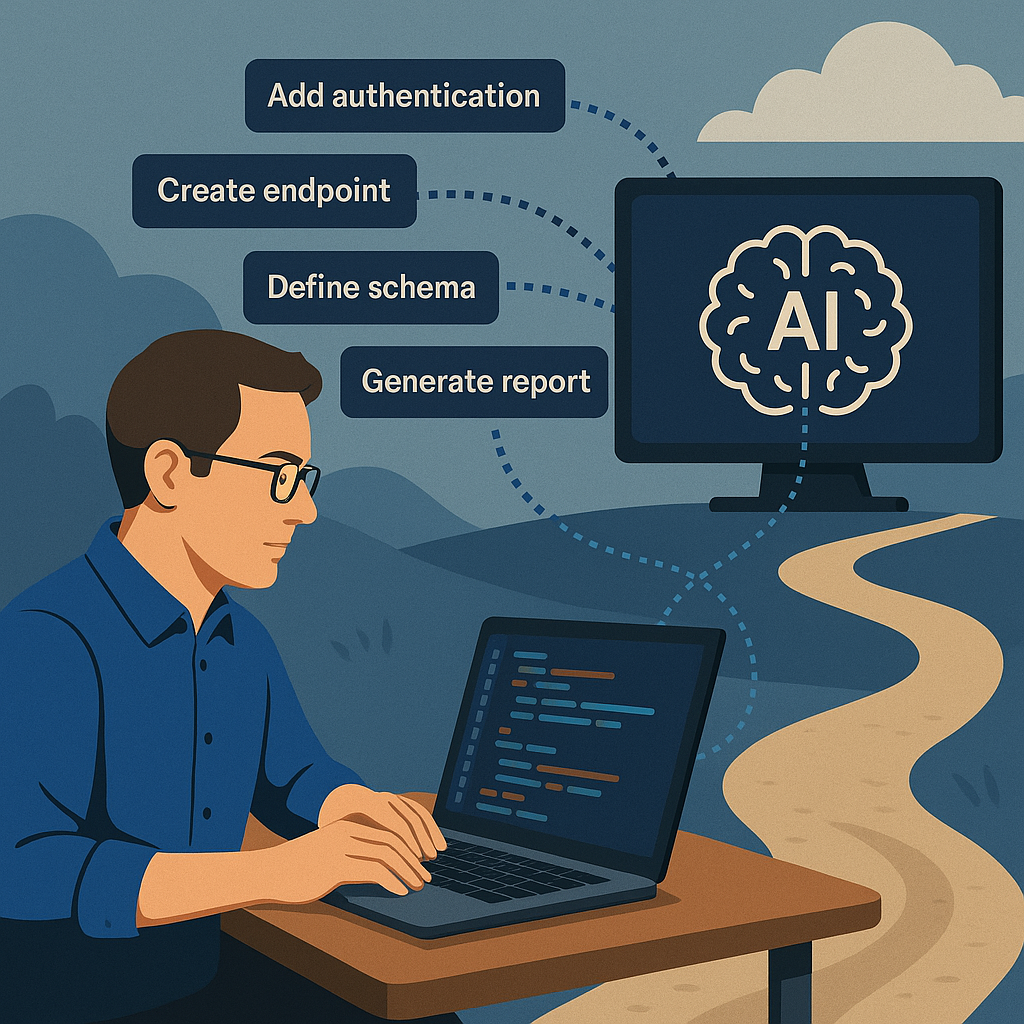 February 1, 2026
Hallucination Driven Development: Why Desire Path Design Is the Future
Steve Yegge stopped fighting his coding agent's 'hallucinations' and started building the commands it kept guessing at instead. That's just Convention over Configuration for the LLM age -- and it changes what "being right" as a developer means.
Read →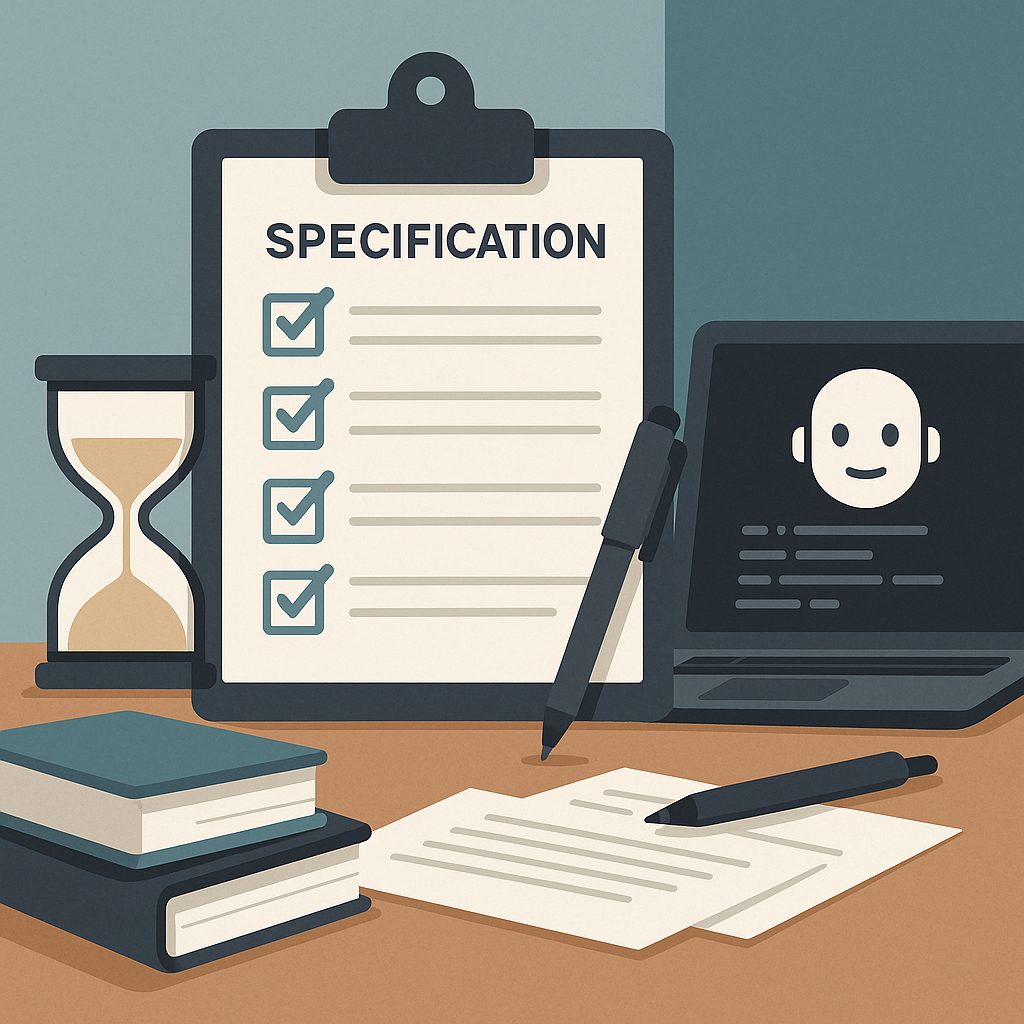 December 10, 2025
The Two-Hour Specification
How writing a genuinely detailed spec -- and following a Research/Plan/Implement discipline with Claude Code -- took a demo from a month down to five hours, and why "Vibe Coding" and "AI Slop" are really just names for skipping that step.
Read →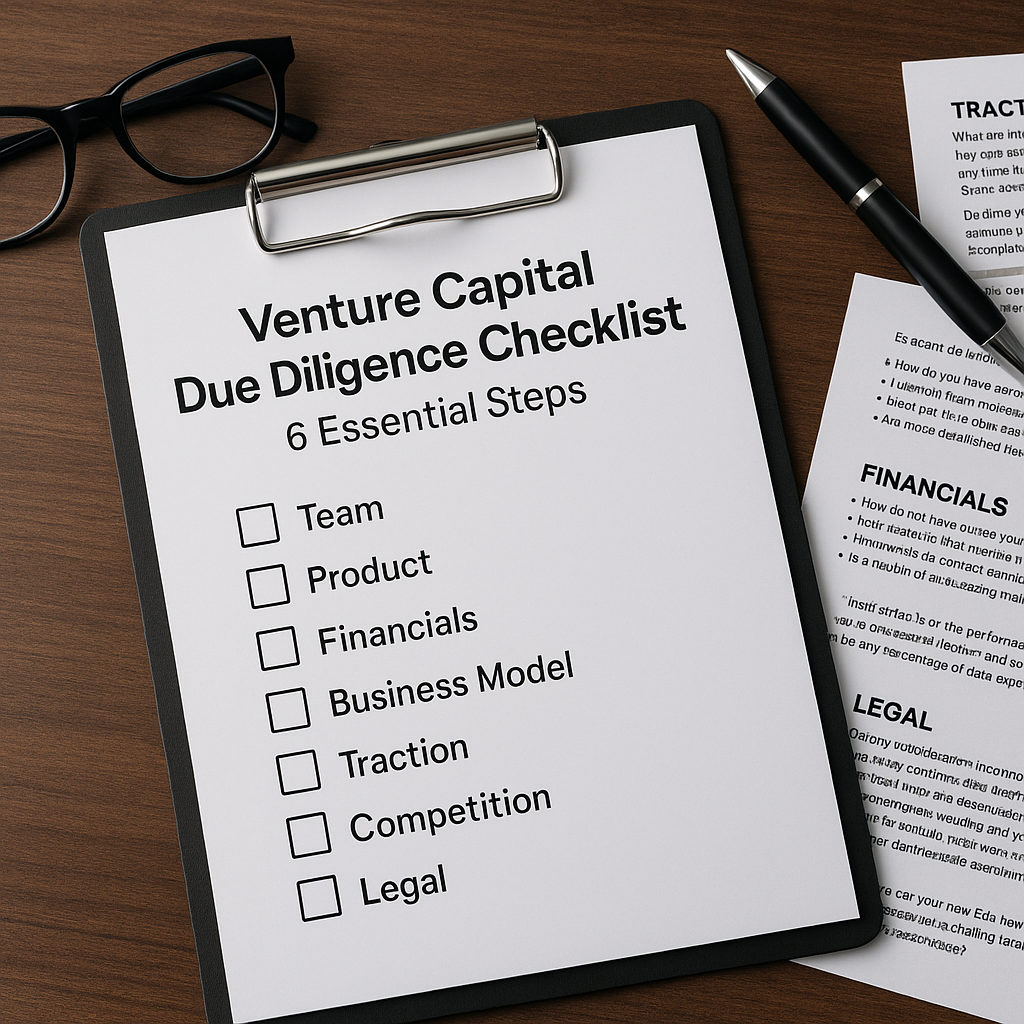 October 23, 2025
Venture Capital Due Diligence Checklist: 6 Essential Steps
The battle-tested framework we use ourselves to pressure-test a deal across eight domains -- team, product, financials, business model, traction, competition, and legal -- before the check gets wired.
Read →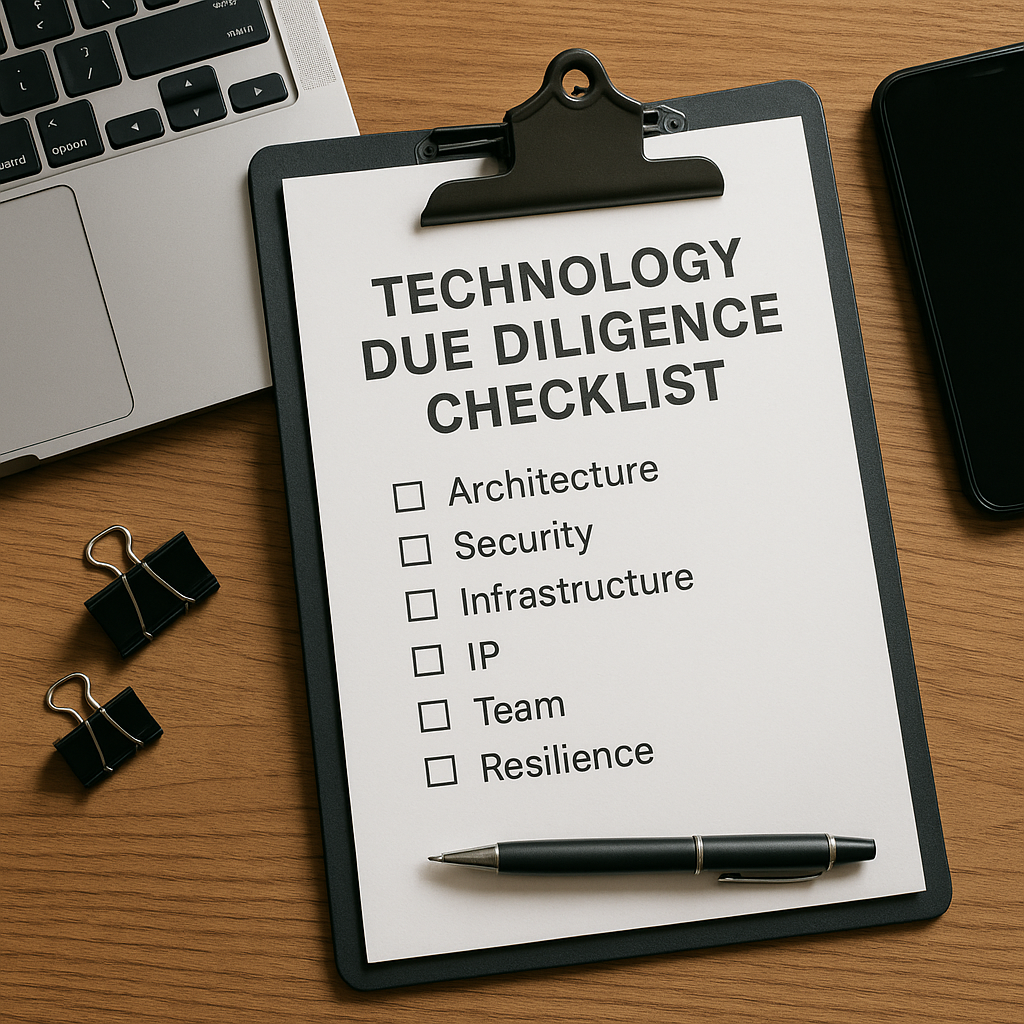 October 23, 2025
Technology Due Diligence Checklist: A 10-Point Investor Guide
A field guide to technology due diligence, sharpened on the deals we've won and the ones we wisely walked away from -- architecture, security, infrastructure, IP, team, and resilience, down to the exact artifacts you should ask to see.
Read → September 4, 2025
The AI Breakup: It's Not You. It's Me.
AI adoption is in its honeymoon phase -- and some users are already forming emotional attachments to their chatbots. What that says about the MIT study on failed AI pilots, and what it actually means for how investors should be using AI.
Read → November 6, 2024
RTO -- At What Cost
Fully remote jobs going back to the office doesn't correlate with productivity -- so why are large corporations doing it anyway? A look at what return-to-office is actually buying, and at what cost.
Read →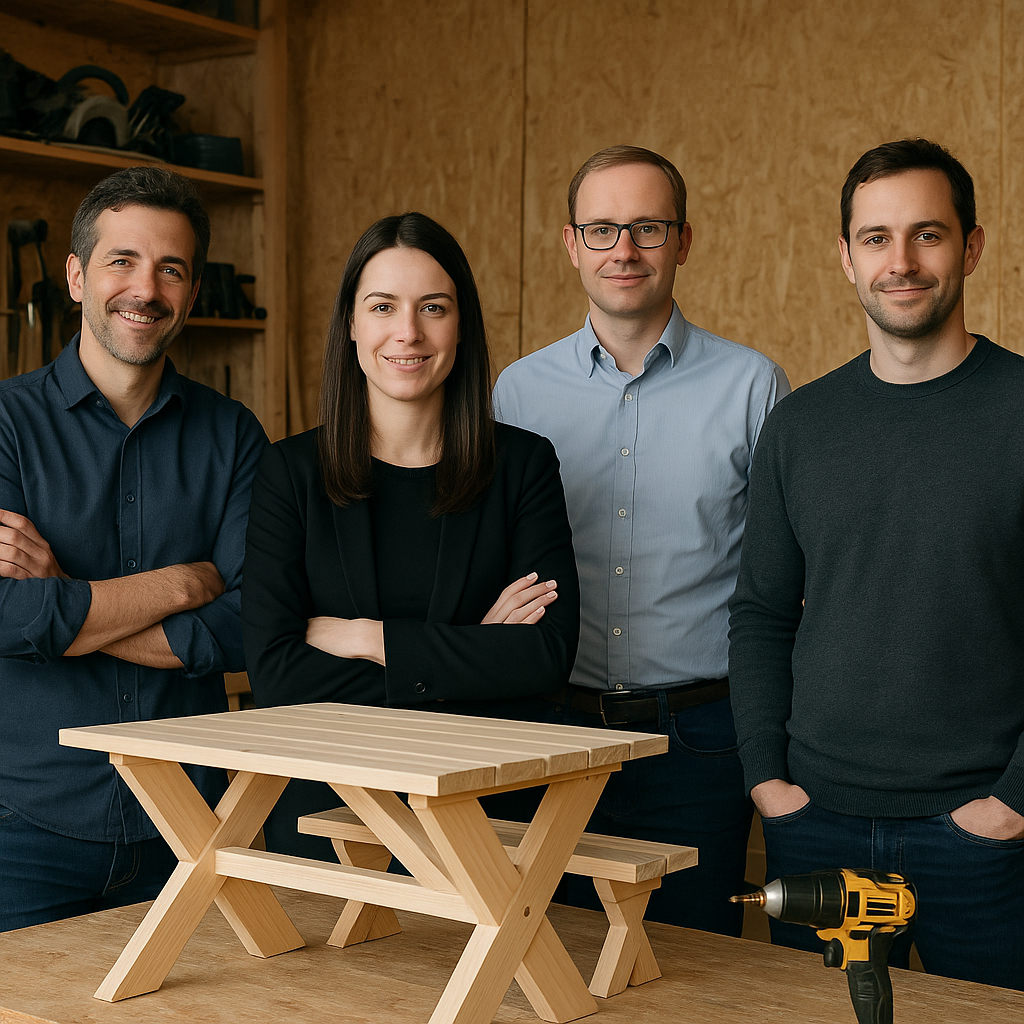 July 3, 2024
We Know What to Look For, Because We Build
Osparna's team builds things outside of work too -- and that's not incidental. It's exactly what makes the diligence sharper. I work with people I like.
Read → April 23, 2020
Who's on Your Team?
Coachability, character, and the ability to work well in a distributed environment now matter more than raw technical expertise -- what COVID-era diligence is teaching investors about what to actually look for in a team.
Read → February 28, 2020
Moneyball for Investing
Why "Moneyball for Investing" became our catchphrase, why it's the wrong analogy, and what Osparna actually is: the diary you keep to track what you were thinking when you made the call.
Read → February 23, 2020
How to Buy a...House
Before Osparna focused on investors, the alpha version was general enough to score any decision -- including which house to buy. Here's how establish-weight-rate-review played out on a real move to Florida.
Read → February 3, 2020
Managing Bias
Biases underpin our intuition about investing, whether we admit it or not. Why declaring your criteria explicitly -- and being able to look back at what you decided and why -- is the real defense against them.
Read → November 11, 2019
Introducing Osparna
The first post on osparna.com: why we built a platform to bring decision science to investing, and what to expect from this space going forward.
Read →